Archive for November 14th, 2025

LIFT OFF OF SECOND MANNED MISSION

OTD: 14 Nov. 1969 Apollo 12 Launches to the Moon for Second Crewed Landing  - Space Center Houston

55 Years Ago: Apollo 12 Makes a Pinpoint Landing on the Moon - NASA

Left: The crew of Apollo 12 – Charles “Pete” Conrad,
left, Richard F. Gordon, and Alan L. Bean. Right:

Apollo 12, the second manned mission to the surface of
the moon,was launched from Cape Canaveral, Florida,
with astronauts Charles Conrad, Jr.; Richard F. Gordon,
Jr.; and Alan L. Bean aboard.

President Richard Nixon viewed the liftoff from Pad A at
Cape Canaveral. He was the first president to attend the
liftoff of a manned space flight.

Thirty-six seconds after takeoff, lightning struck the
ascending Saturn 5 launch rocket (below )which tripped
the circuit breakers in the command module and caused
a power failure.

Fortunately, the launching rocket continued up normally,
and within a few minutes power was restored in the
spacecraft.

Apollo 12 Lightning Strike Incident
President Richard Nixon (white coat) viewing the liftoff of
Apollo 12.

That Time Apollo 12 Got Struck by Lightning, Twice

                                 Apollo 12 - Wikipedia

posted by Bob Karm in ANNIVERSARY,Apollo mission,HISTORY,NASA,President,weather and have No Comments

FIRST AMERICAN EDITION ON THIS DAY IN 1851

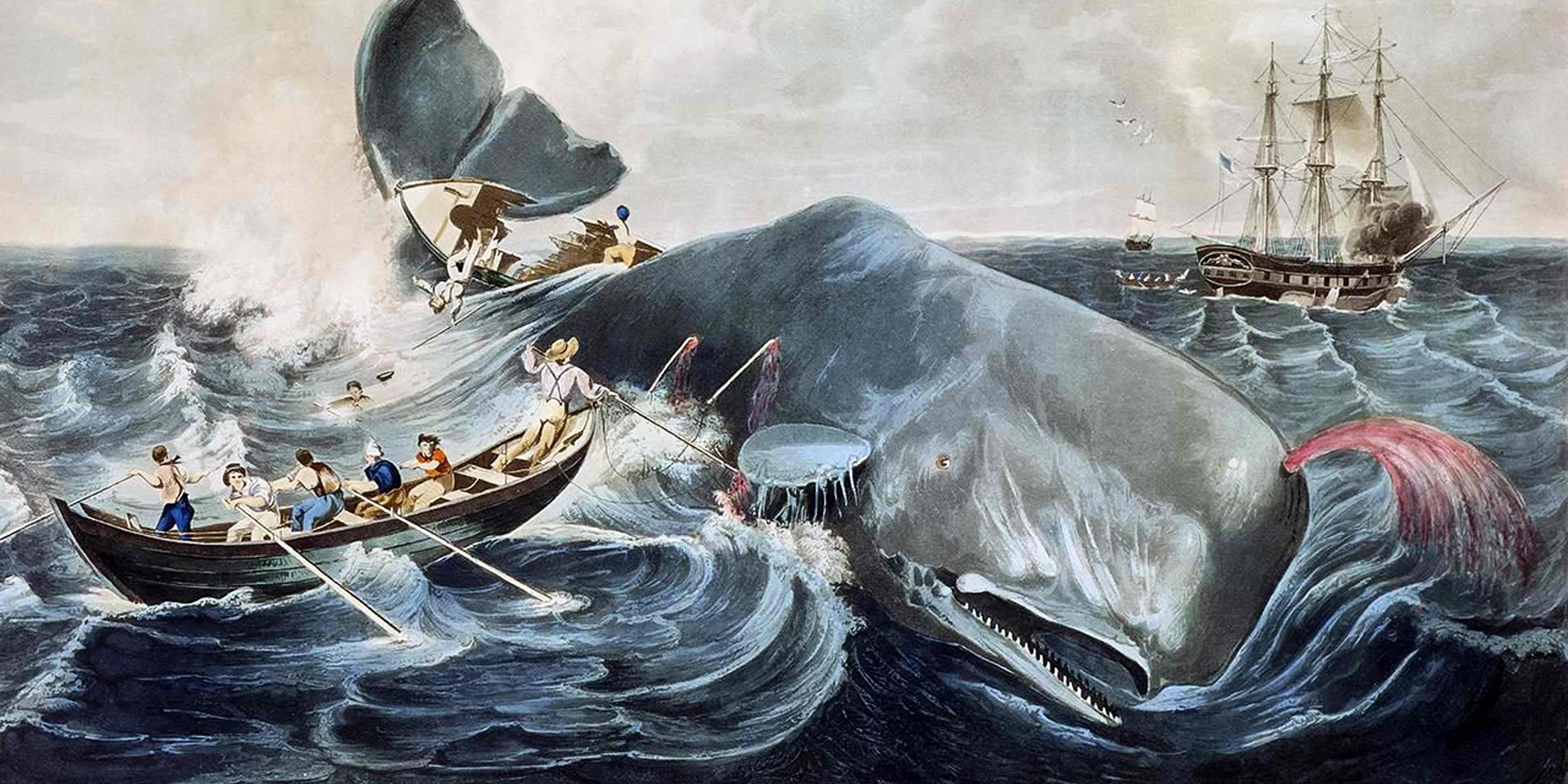
USA: A model for Herman Melville's Moby Dick (1851). 'Capturing a Sperm Whale', coloured engraving by J. Hill, 1835, after William Page (1811-1885)

Herman Melville - World History Encyclopedia
Herman Melville (August 1, 1819 – September 28, 1891)

On November 14, 1851, Moby-Dick was published. Now
considered a great classic of American literature—with
one of the most famous opening lines in fiction: “Call
me Ishmael”—the book about Captain Ahab and his
quest to catch a giant white whale was originally a big
flop.

Its author, Herman Melville was born in New York City
in 1819. As a young man, he spent time in the merchant
marines, the U.S. Navy and on a whaling ship in the South
Seas.

In 1846, he published his first novel, Typee, a romantic
adventure based on his experiences in Polynesia.

The book was a success and a sequel, Omoo, was
published in 1847. Three more novels followed, with
mixed critical and commercial results.

Melville died in 1891, largely forgotten by the literary
world. By the 1920s, scholars had rediscovered his
work, particularly Moby-Dick, which would eventually
become a staple of high school reading lists across
the United States. Billy Budd, Melville’s final novel,
was published in 1924, 33 years after his death.

(Item #4959) Moby Dick. Herman Melville.
First U.S. edition.

Image 4 of 6 for Moby Dick

posted by Bob Karm in ANNIVERSARY,Author,HISTORY,Novel,Published and have No Comments