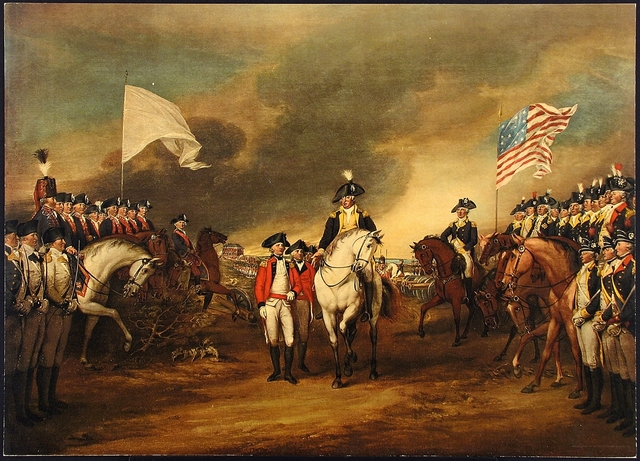
Hopelessly trapped at Yorktown, Virginia, British General
Lord Cornwallis surrendered 8,000 British soldiers and
seamen to a larger Franco-American force, effectively
bringing an end to the American Revolution.
Hopelessly trapped at Yorktown, Virginia, British General
Lord Cornwallis surrendered 8,000 British soldiers and
seamen to a larger Franco-American force, effectively
bringing an end to the American Revolution.

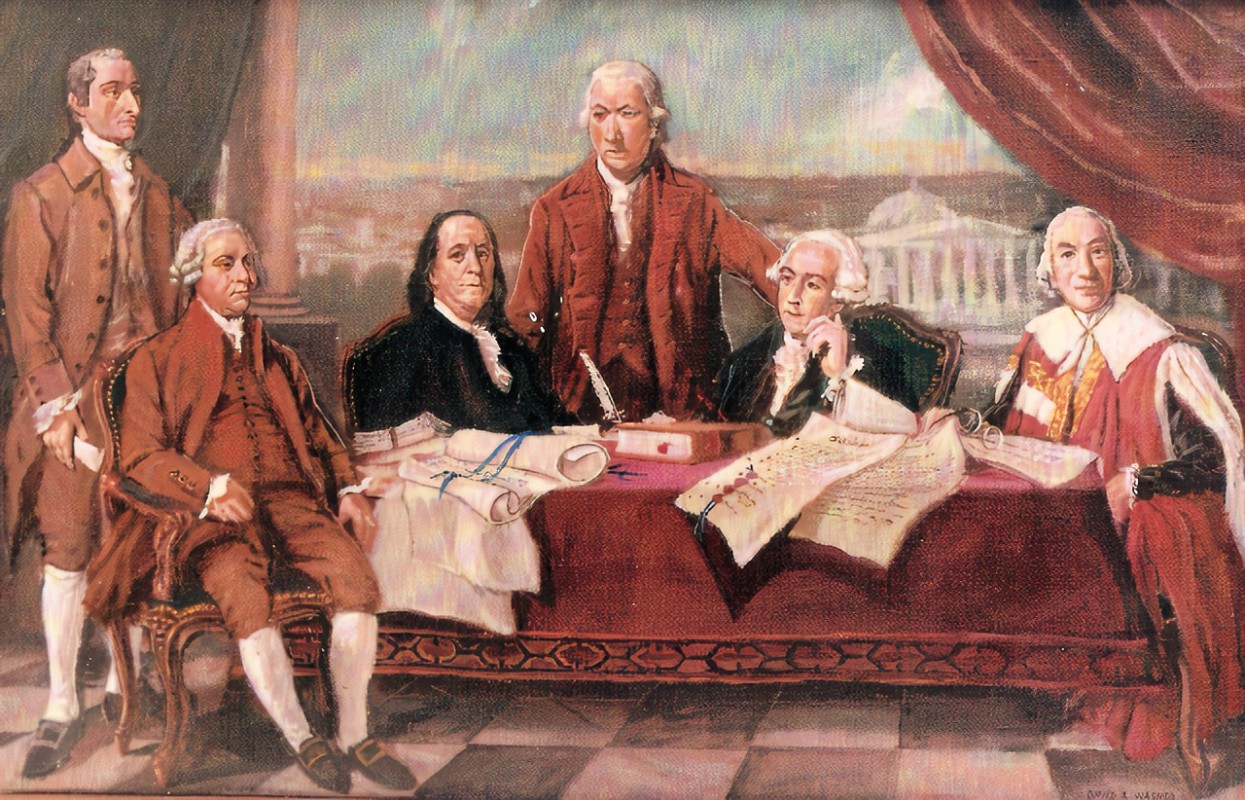
The American Revolution officially came to an end when
representatives of the United States, Great Britain, Spain
and France sign the Treaty of Paris on September 3, 1783.
The signing signified America’s status as a free nation, as
Britain formally recognized the independence of its 13
former American colonies, and the boundaries of the new
republic were agreed upon: Florida north to the Great
Lakes and the Atlantic coast west to the Mississippi
River.

SAVANNAH, Ga. (AP) — A warehouse along the Savannah River
is holding historical treasures that evidence suggests remained
lost for more than 240 years — a cache of 19 cannons that
researchers suspect came from British ships scuttled to the river
bottom during the American Revolution.
The mud- and rust-encrusted guns were discovered by accident
when a dredge scooping sediment from the riverbed last year as
part of a $973 million deepening of Savannah’s busy shipping
channel surfaced with one of the cannons clasped in its metal
jaws. The crew soon dug up two more.
Archaeologists guessed they were possibly leftover relics from
a sunken Confederate gunship excavated a few years earlier in
the same area, according to Andrea Farmer, an archaeologist
for the Army Corps of Engineers. But experts for the U.S. Navy
found they didn’t match any known cannons used in the Civil
War. Further research indicates they’re likely almost a century
older and sank during the buildup to the Revolutionary War’s
bloody siege of Savannah in 1779.
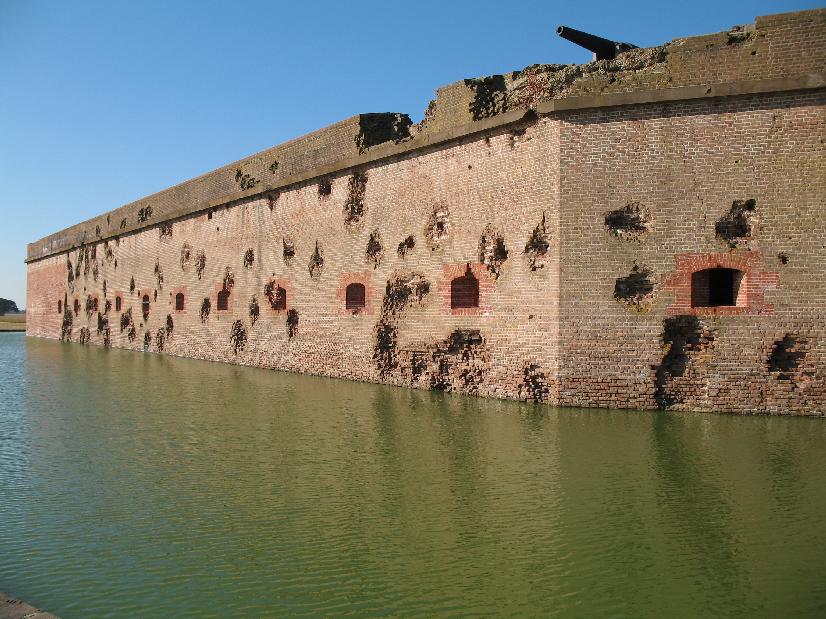
Fort Jackson just outside Savannah, Ga.
Painting of The Siege of Savannah.
April 19, 1775: At about 5 a.m., 700 British troops, on a mission to capture Patriot leaders and seize a Patriot arsenal, march into
Lexington to find 77 armed minutemen under Captain John Parker waiting for them on the town’s common green. British Major John Pitcairn ordered the outnumbered Patriots to disperse, and after a moment’s hesitation the Americans began to drift off the green. Suddenly, a shot was fired from an undetermined gun, and a cloud
of musket smoke soon covered the green. When the brief Battle of Lexington ended, eight Americans lay dead or dying and 10 others
were wounded. Only one British soldier was injured, but the
American Revolution had begun.


John Parker
(July 13, 1729 – September 17, 1775)
Battle of Lexington State Historic Site today.

Hopelessly trapped at Yorktown, Virginia, British General Lord
Cornwallis surrendered 8,000 British soldiers and seamen to a
larger Franco-American force, effectively bringing an end to the
American Revolution.
Lord Cornwallis was one of the most capable British generals
of the American Revolution. In 1776, he drove General George
Washington’s Patriots forces out of New Jersey, and in 1780
he won a stunning victory over General Horatio Gates’ Patriot
army at Camden,South Carolina.

Charles Cornwallis, 1st Marquess Cornwallis
(December 31, 1738 – October 5, 1805)