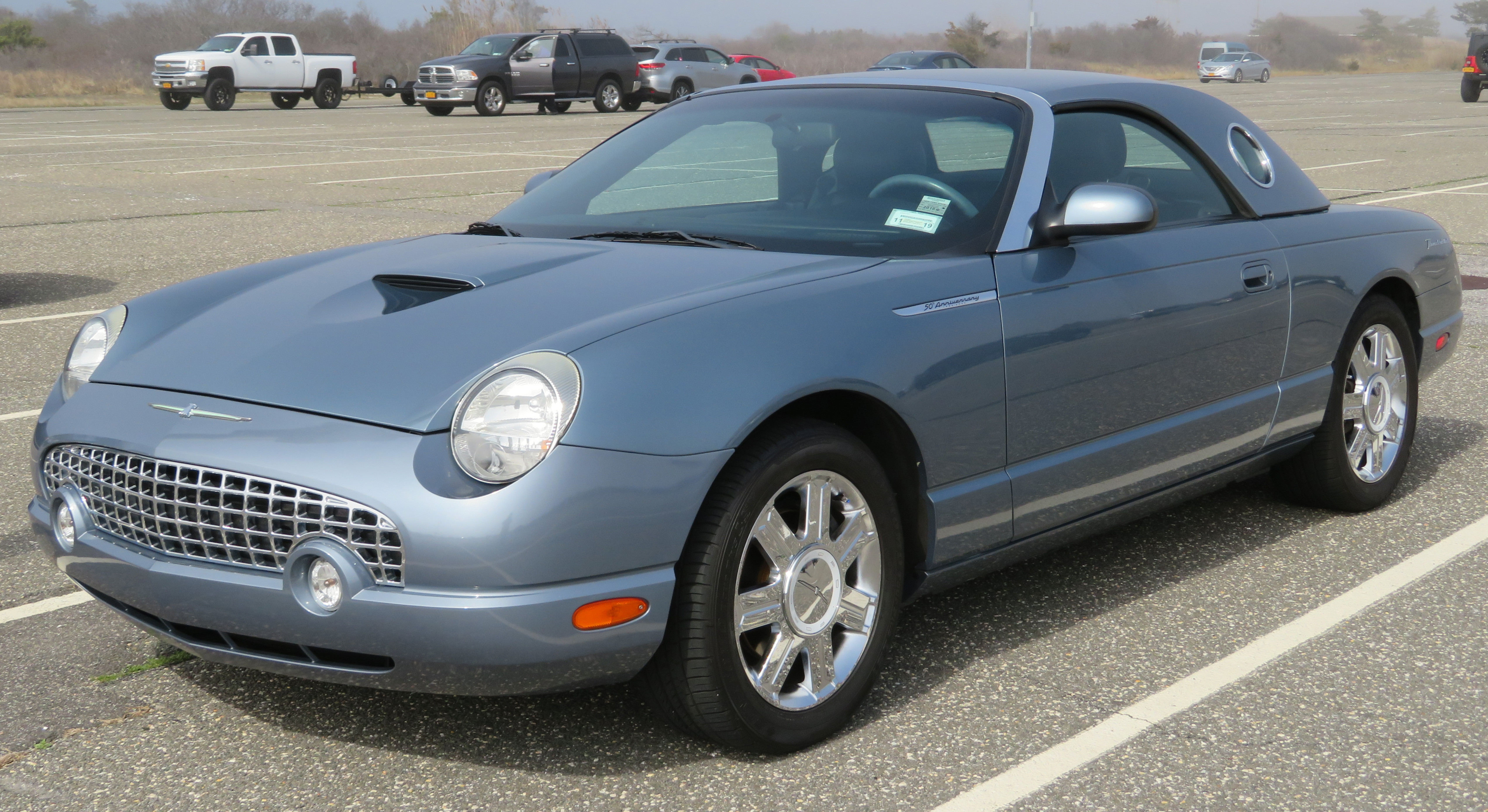
The last Thunderbird, Ford Motor Company’s iconic sports car,
emerged from a Ford factory in Wixom, Michigan on July 1, 2005.
Ford began its development of the Thunderbird in the years
following World War II.

The last Thunderbird, Ford Motor Company’s iconic sports car,
emerged from a Ford factory in Wixom, Michigan on July 1, 2005.
Ford began its development of the Thunderbird in the years
following World War II.

The last Packard—the classic American luxury car with the
famously enigmatic slogan “Ask the Man Who Owns One”—
rolled off the production line at Packard’s plant in Detroit,
Michigan on June 25, 1956.
Packard was founded by James Ward Packard, his brother
William, and their partner, George Lewis Weiss, in Warren,
Ohio.
The first Packard automobiles were produced in 1899.
The Packard brothers, William Doud (left) and James Ward
(right) as seen in company portraits.

On March 2, 1966, in Dearborn, Michigan, the Ford Motor
Company celebrated the production of its 1 millionth
Mustang, a white convertible.
The sporty, affordable vehicle was officially launched two
years earlier, on April 17, 1964, at the World’s Fair in
Flushing Meadows, New York.
That same day, the new car debuted in Ford showrooms
across America; almost immediately, buyers snapped up
nearly 22,000 of them. More than 400,000 Mustangs were
sold within that first year, exceeding sales expectations.

WASHINGTON (TNND) — The newly formed Department of
Government Efficiency, led by Elon Musk (above) suggests
cutting penny production to save money.
Musk said…” the penny costs over 3 cents to make and cost
US taxpayers over $179 million in 2023.”
The U.S. Mint reported a loss of $179 million in 2023 from
penny production, having produced over 4.5 billion pennies
that year. This financial loss has sparked debates about
whether the penny should remain in circulation.
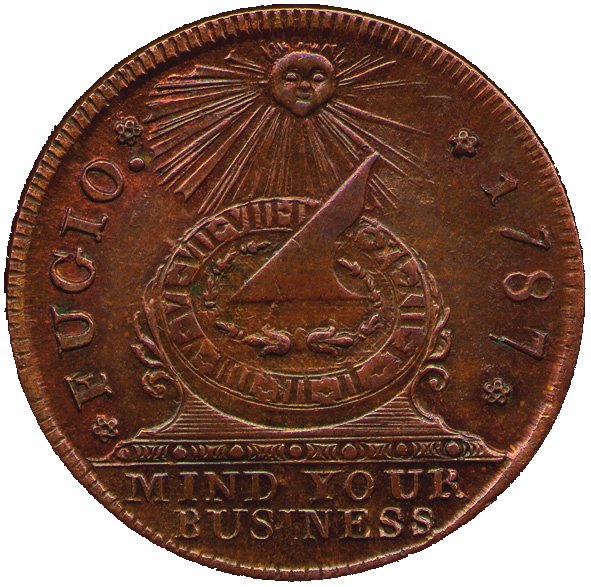
The first U.S. cent was produced in 1787 and has been the
lowest face-value physical unit of U.S. currency since the
abolition of the half-cent in 1857.
The 1787 "New Haven Restrike", probably produced at
the Scovill Mint in Waterbury, Connecticut.
On April 27, 2009, the struggling American auto giant General
Motors (GM) said it plans to discontinue production of its more
than 80-year-old Pontiac brand.
Pontiac’s origins date back to the Oakland Motor Car, which
was founded in 1907 in Pontiac, Michigan, by Edward Murphy,
a horse-drawn carriage manufacturer. In 1909, Oakland became
part of General Motors, a conglomerate formed the previous
year by another former buggy company executive, William
Durant. The first Pontiac model made its debut as part of the
Oakland line in the 1920s.
The car, which featured a six-cylinder engine, proved so popular
that the Oakland name was eventually dropped and Pontiac
became its own GM division by the early 1930s.
The first Pontiac joined GM’s lineup in 1932. It became so popular that it replaced the Oakland name.
One of the final 2010 Pontiac G6 sedans moves down the
line at General Motors Orion assembly plant in Michigan.
The production marked the end of the line for the venerable Pontiac nameplate.