The state of Idaho was admitted to the Union on July 3, 1890.

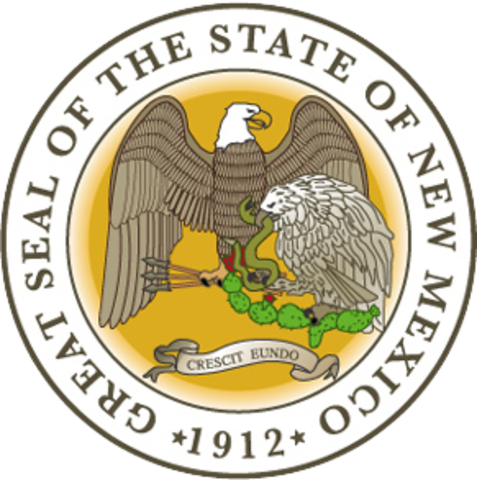
On January 6, 1912, New Mexico was admitted into
the United States as the 47th state.
Spanish explorers passed through the area that would
become New Mexico in the early 16th century, they
encountered the well-preserved remains of a 13th-
century Pueblo civilization. Exaggerated rumors about
the hidden riches of these Pueblo cities encouraged the
first full-scale Spanish expedition into New Mexico, led
by Francisco Vasquez de Coronado in 1540. Instead of
encountering the long-departed Pueblo people, the
Spanish explorers met other Indigenous groups, like
the Apaches, who were fiercely resistant to the early
Spanish missions and ranches in the area.
Francisco Vázquez de Coronado
(1510 – 22 September 1554)


Illinois achieved full statehood on this day. Though Illinois
presented unique challenges to immigrants unaccustomed
to the soil and vegetation of the area, it grew to become a
bustling and densely populated state.
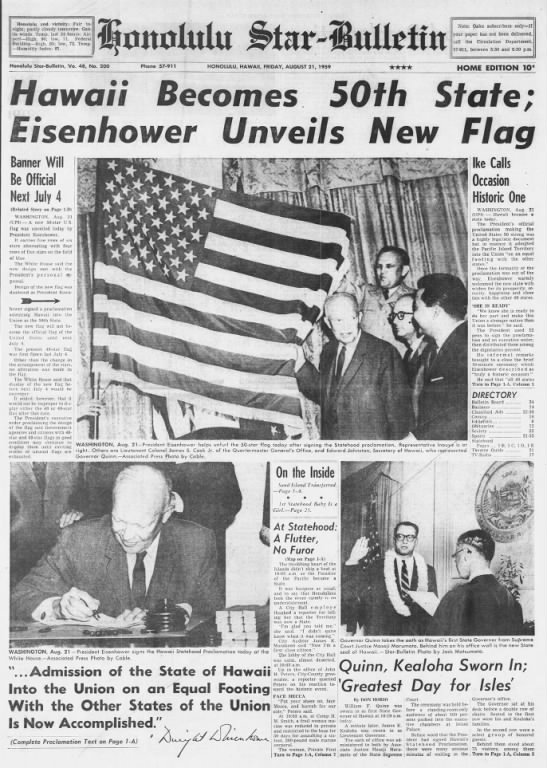
The modern United States receives its crowning star when
President Dwight D. Eisenhower signed a proclamation
admitting Hawaii into the Union as the 50th state. The
president also issued an order for an American flag
featuring 50 stars arranged in staggered rows: five six-
star rows and four five-star rows. The new flag became
official July 4, 1960.
President Dwight Eisenhower helps unfurl the new 50-star
flag on Aug. 21, 1959 after signing a proclamation making
Hawaii the 50th state of the union. At right is Daniel K.
Inouye, Democratic congressman-elect from Hawaii.

On July 3, 1890, the Idaho Territory became the 43rd state
in the Union..
Exploration of the North American continent mostly proceeded
inward from the Atlantic and Pacific coasts and northward from
Spanish Mexico. Therefore, the rugged territory that would
become Idaho long remained untouched by Spanish, French,
British and American trappers and explorers. Even as late as
1805, Idaho Native Americans like the Shoshone had never
encountered Europeans.