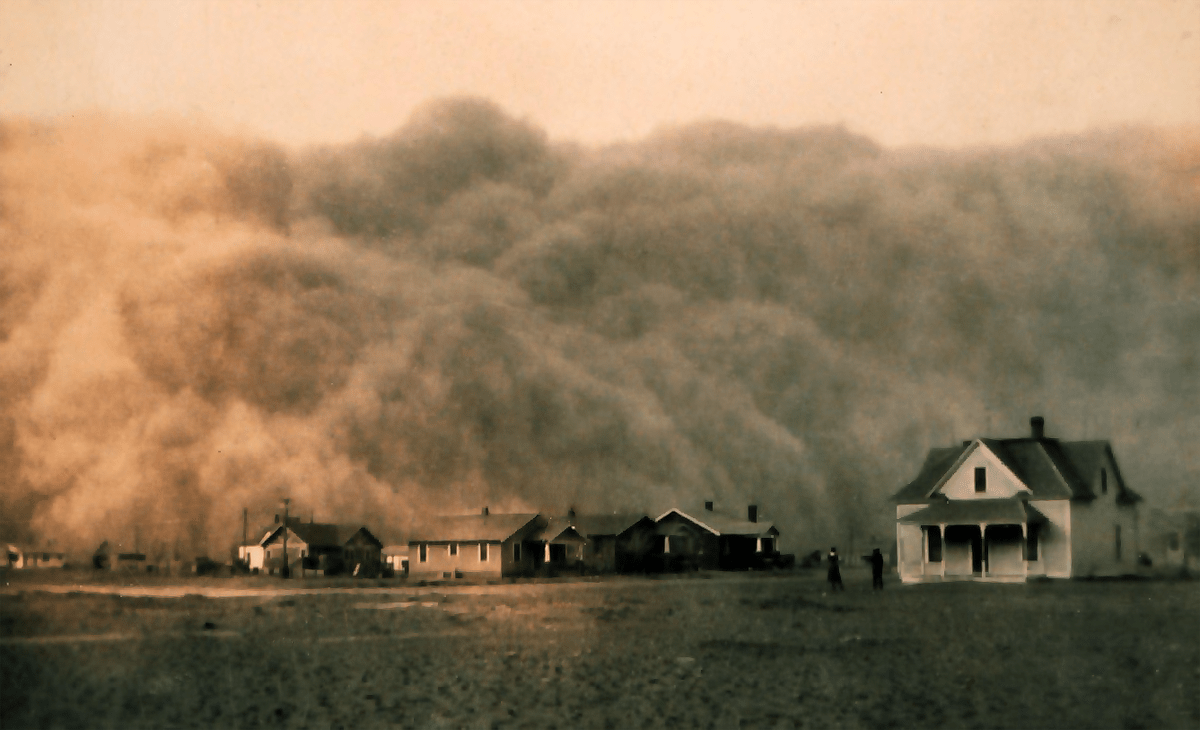
On May 11, 1934, a massive storm sent millions of tons of topsoil
flying from across the parched Great Plains region of the United
States as far east as New York, Boston and Atlanta.
At the time the Great Plains were settled in the mid-1800s, the
land was covered by prairie grass, which held moisture in the
earth and kept most of the soil from blowing away even during
dry spells.
By the early 20th century, however, farmers had plowed under
much of the grass to create fields. The U.S. entry into World War
I in 1917 caused a great need for wheat, and farms began to push
their fields to the limit, plowing under more and more grassland
with the newly invented tractor.


