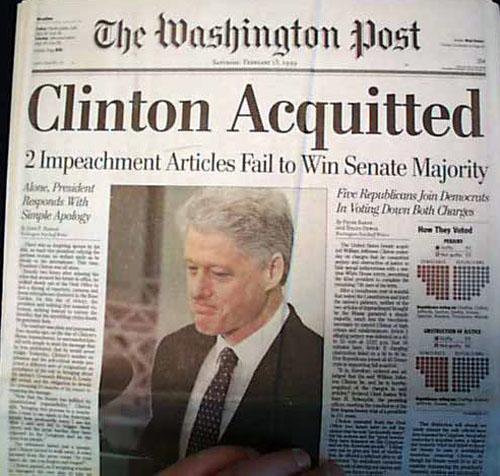
On February 12, 1999, the five-week impeachment trial of Bill
Clinton came to an end, with the Senate voting to acquit the
president on both articles of impeachment: perjury and
obstruction of justice.

On February 12, 1999, the five-week impeachment trial of Bill
Clinton came to an end, with the Senate voting to acquit the
president on both articles of impeachment: perjury and
obstruction of justice.

Future U.S. president Abraham Lincoln was born in Hodgenville, Kentucky on February 12, 1809.
Lincoln, one of America’s most admired presidents, grew up a
member of a poor family in Kentucky and Indiana. He attended
school for only one year, but thereafter read on his own in a
continual effort to improve his mind. As an adult, he lived in
Illinois and performed a variety of jobs including stints as a
postmaster, surveyor and shopkeeper, before entering politics.
He served in the Illinois legislature from 1834 to 1842 and in
Congress from 1847-1849, and then became an attorney.


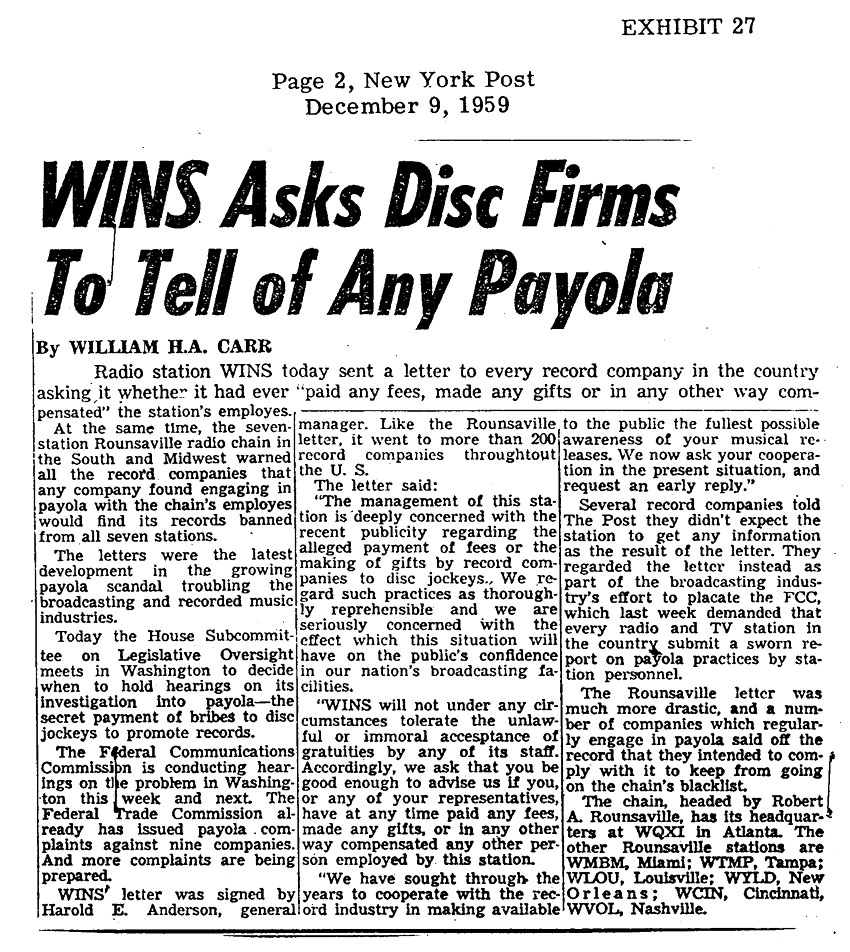
The Payola scandal reaches a new level of public prominence
and legal gravity on this day 1960, when President Eisenhower
called it an issue of public morality and the FCC proposed a
new law making involvement in Payola a criminal act.
What exactly was Payola? During the hearings conducted by Congressman Oren Harris (D-Arkansas) and his powerful
Subcommittee on Legislative Oversight—fresh off its inquiry
into quiz-show rigging—the term was sometimes used as a
blanket reference to a range of corrupt practices in the radio
and recording industries.
But within the music business, Payola referred specifically to
a practice that was nearly as old as the industry itself: making
popular hits by paying for radio play.

Dwight David Eisenhower
(October 14, 1890 – March 28, 1969)
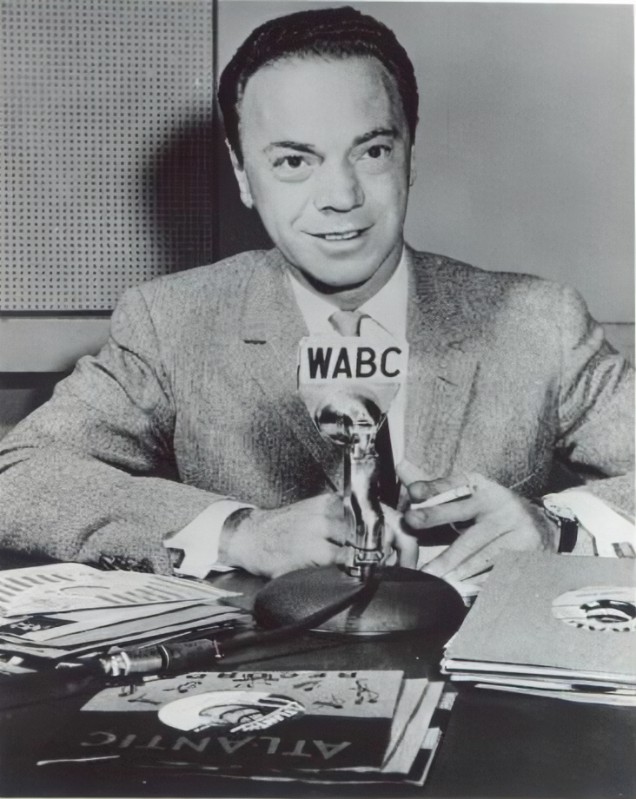
Albert James "Alan" Freed
(December 15, 1921 – January 20, 1965)
In 1960, payola was made illegal. In December 1962, after
being charged on multiple counts of commercial bribery,
Freed pled guilty to two counts of commercial bribery,
fined three hundred dollars and was given a suspended
sentence.



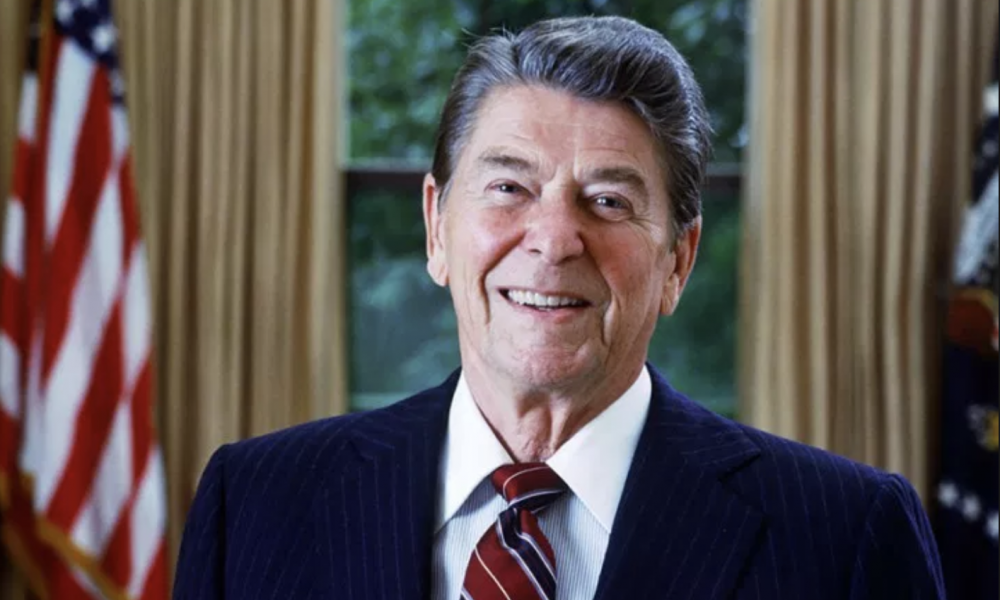
Ronald Wilson Reagan (February 6, 1911 – June 5, 2004)
As the 40th president of the United States, the former movie star
was called the “Great Communicator” for his ability to get through
to ordinary Americans and give them hope and optimism for their
own future and that of their country.
Despite his lifelong opposition to “big” government, he was credited
with restoring faith in the U.S. government and the presidency after
a long era of disillusionment in the wake of Nixon, Vietnam and
economic hardship under Carter.
But before his years of Hollywood stardom, and long before
Washington, Ronald Reagan was born on February 6, 1911,
in Tampico, a small town in northwestern Illinois.


