1990

Oscar-winning actress Julia Roberts is 58 years young
today.

Complicated and tension-filled negotiations between the United
States and the Soviet Union finally result in a plan to end the two
-week-old Cuban Missile Crisis. A frightening period in which
nuclear holocaust seemed imminent began to come to an end.


In a televised speech of extraordinary gravity, President John F.
Kennedy announced on October 22, 1962 that U.S. spy planes
have discovered Soviet missile bases in Cuba.
These missile sites—under construction but nearing completion —housed medium-range missiles capable of striking a number
of major cities in the United States, including Washington, D.C.
Kennedy announced that he was ordering a naval “quarantine”
of Cuba to prevent Soviet ships from transporting any more
offensive weapons to the island and explained that the United
States would not tolerate the existence of the missile sites
currently in place.
The president made it clear that America would not stop short
of military action to end what he called a “clandestine, reckless
and provocative threat to world peace.”


John F. Kennedy and Nikita Khrushchev

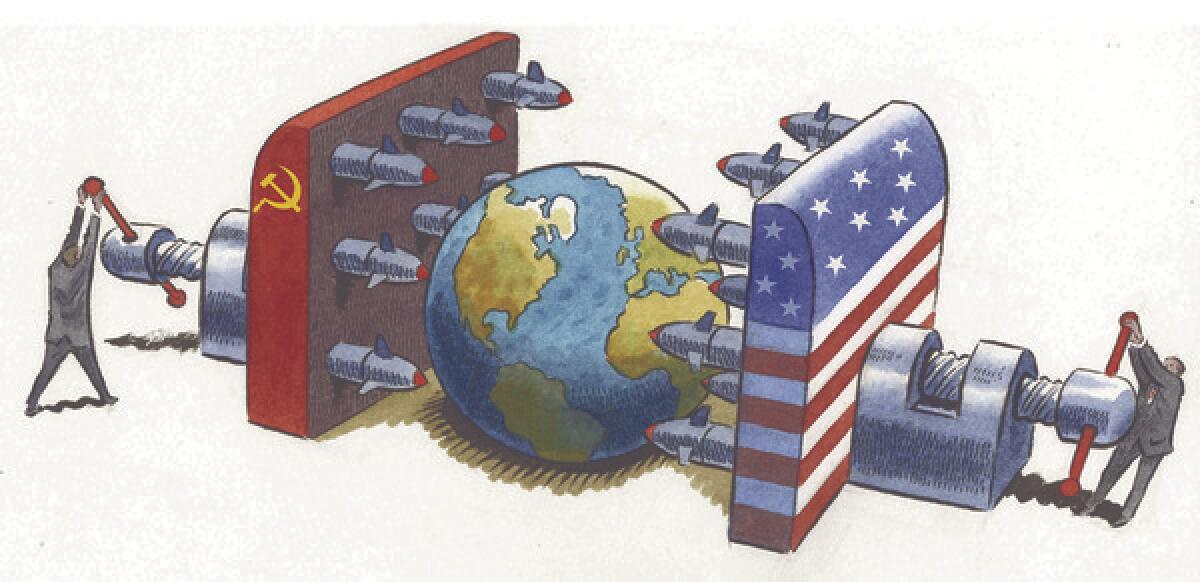
The Cuban Missile Crisis began on October 14, 1962, bringing
the United States and the Soviet Union to the brink of nuclear
conflict.
Photographs taken by a high-altitude U-2 spy plane offered incontrovertible evidence that Soviet-made medium-range
missiles in Cuba—capable of carrying nuclear warheads—
were now stationed 90 miles off the American coastline.


Khrushchev, Castro, and Kennedy.
Complicated and tension-filled negotiations between the United
States and the Soviet Union finally resulted in a plan to end the
two-week-old Cuban Missile Crisis. A frightening period in which
nuclear holocaust seemed imminent began to come to an end.