


William Jefferson Clinton, born and raised in Arkansas, was the
42nd president of the United States from 1993 to 2001. He is a
member of the Democratic Party.

William Jefferson Clinton, born and raised in Arkansas, was the
42nd president of the United States from 1993 to 2001. He is a
member of the Democratic Party.


On August 19, 1911, the first race was held at the Indianapolis
Motor Speedway, now the home of the world’s most famous
motor racing competition, the Indianapolis 500.
Built on farmland five miles northwest of Indianapolis, Indiana,
the speedway was started by local businessmen as a testing
facility for Indiana’s growing automobile industry.
The idea was that occasional races at the track would pit cars
from different manufacturers against each other. After seeing
what these cars could do, spectators would presumably head
down to the showroom of their choice to get a closer look.

Ray Harroun won the race in his Harmon Wasp with an
average speed of 74.6 mph.


On August 19, 1791, the accomplished American mathematician
and astronomer Benjamin Banneker wrote a letter to then-
Secretary of State Thomas Jefferson.
Jefferson corresponded prolifically with luminaries from around
the world, but Banneker is unique among them: the son of a free
Black American woman and a formerly enslaved African man from Guinea, Banneker criticizes Jefferson’s hypocritical stance on
slavery in respectful but unambiguous terms, using Jefferson’s
own words to make his case for the abolition of slavery.
Banneker himself was born free in what is now Ellicott City,
Maryland, and was encouraged in his studies of astronomy
and mathematics by the Ellicotts, a Quaker family who owned
a mill and much of the land in the area.


A researcher may have uncovered the oldest written references
to Moses, dating back 3,800 years and hidden in an Egyptian
desert.
The two etchings were found at Serabit el-Khadim, an ancient
turquoise mining site in the Sinai Desert where Semitic laborers
once worked during the Middle Bronze Age.
The Proto-Sinaitic inscriptions date back between 1800 and 1600
B.C.

They were etched centuries before the earliest parts of the Bible
were written between the 10th and 7th centuries B.C.
The two inscriptions, among many at the site, were first discovered
in the early 1900s, but they’re now being reanalyzed by an American-Israeli epigraphist named Michael S. Bar-Ron.
The expert, who’s also a graduate student at Ariel University, spoke
with Fox News Digital about the discovery.


1964

2019
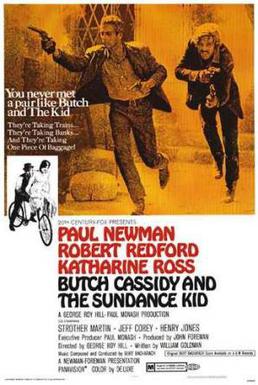
Robert Redford is an actor and filmmaker who has received
numerous accolades such as an Academy Award, a BAFTA
Award, and two Golden Globe Awards, as well as the Cecil B.
DeMille Award in 1994, the Screen Actors Guild Life Achievement
Award in 1996, the Academy Honorary Award in 2002, the Kennedy Center Honors in 2005, the Presidential Medal of Freedom in 2016,
and the Honorary César in 2019. He was named by Time as one of
the 100 most influential people in the world in 2014.


