


ED DANAHUE

ED DANAHUE

(September 15, 1846 – August 21, 1910)
On this day in 1899, George F. Grant, an African American
dentist from Boston, received US Patent number 638,920
for the world’s first golf tee.
Neither a marketer nor an inventor, Grant, who was also
the first African-American professor at Harvard, gave
away a few copies of his creation but made no money
from it before he died.


After a 13-year struggle with the bottle, stockbroker Bill Wilson
took his last drink of the hard stuff on this day in 1934.
The following year, he along with Doctor Bob Smith, would
found Alcoholics Anonymous the groundbreaking program
that treated alcoholism not as a moral failing, but as a
disease.


On December 10, 1690, a failed attack on Quebec and
subsequent near-mutiny force the Massachusetts Bay
Colony to issue the first paper currency in the history
of the Western Hemisphere.
With a shortage of coins and nothing else to pay the
troops with, Governor William Phips of Britain’s
Massachusetts Bay Colony faced a potential mutiny.
With no other option, the General Court of Massachusetts
ordered the printing of a limited amount of government-
backed, paper currency to pay the soldiers.
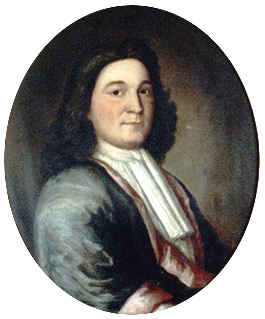
Sir William Phips
(February 2, 1651 – February 18, 1695)

The envoy of Sir William Phips (right) demanding the
surrender of Quebec, 1690.

A Charlie Brown Christmas is a animated television special.
It is the first TV special based on the comic strip Peanuts,
by Charles M. Schulz.
The special aired on this day in 1965 for the first time and
CBS executives, unhappy with the music, the pacing, lack
of a laugh track and Linus reading a Bible verse (from Luke)
almost refused to air it.
However, contrary to their collective apprehension, A
Charlie Brown Christmas received high ratings and
acclaim from critics. It received an Emmy, a Peabody
Award, and became an annual presentation
Charles Monroe "Sparky" Schulz
(November 26, 1922 – February 12, 2000)


