

ROSS SIMPSON


Elvis Presley (The King of Rock and Roll) married Priscilla Beaulieu at the Aladdin Hotel in Las Vegas, Nevada on
May 1, 1967.
ROSS SIMPSON
Elvis Presley (The King of Rock and Roll) married Priscilla Beaulieu at the Aladdin Hotel in Las Vegas, Nevada on
May 1, 1967.

On November 19, 1863, at the dedication of a military
cemetery at Gettysburg, Pennsylvania, during the
American Civil War, President Abraham Lincoln
delivered one of the most memorable speeches in
American history. In fewer than 275 words, Lincoln
brilliantly and movingly reminded a war-weary public
why the Union had to fight, and win, the Civil War.
The Battle of Gettysburg, fought some four months
earlier, was one of the single bloodiest battle of the
Civil War. Over the course of three days, more than
45,000 men were killed, injured, captured or went
missing.
The battle also proved to be the turning point of the war:
General Robert E. Lee’s defeat and retreat from Gettysburg
marked the last Confederate invasion of Northern territory
and the beginning of the Southern army’s ultimate decline.


The Statue of Liberty, a gift of friendship from the people of
France to the people of the United States,was dedicated in
New York Harbor by President Grover Cleveland (above).
Originally known as “Liberty Enlightening the World,” the
statue was proposed by the French historian Edouard de
Laboulaye to commemorate the Franco-American alliance
during the American Revolution.
Designed by French sculptor Frederic-Auguste Bartholdi,
the 151-foot statue was designed by Eugene-Emmanuel
Viollet-le-Duc and Alexandre-Gustave Eiffel, the latter
famous for his design of the Eiffel Tower in Paris.
In May 1884, the statue was completed in France, and three
months later the cornerstone for its pedestal was laid in New
York Harbor. In June 1885, the dismantled Statue of Liberty
arrived in the New World, enclosed in more than 200 packing
cases.

Stephen Grover Cleveland
(March 18, 1837 – June 24, 1908)


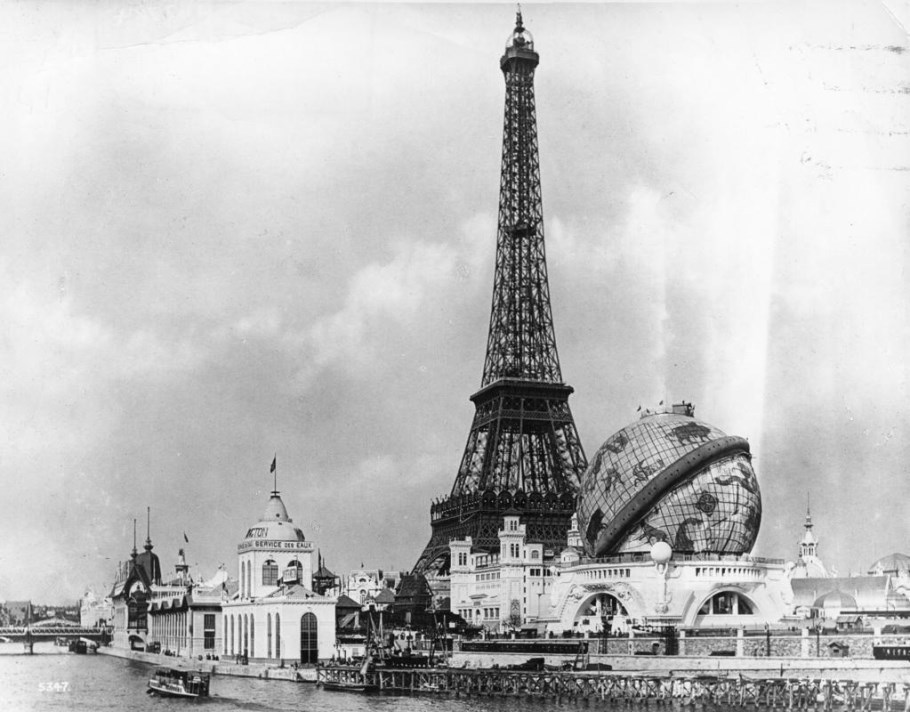
On March 31, 1889, the Eiffel Tower was dedicated in Paris in a
ceremony presided over by Gustave Eiffel, the tower’s designer,
and attended by French Prime Minister Pierre Tirard, a handful
of other dignitaries, and 200 construction workers.
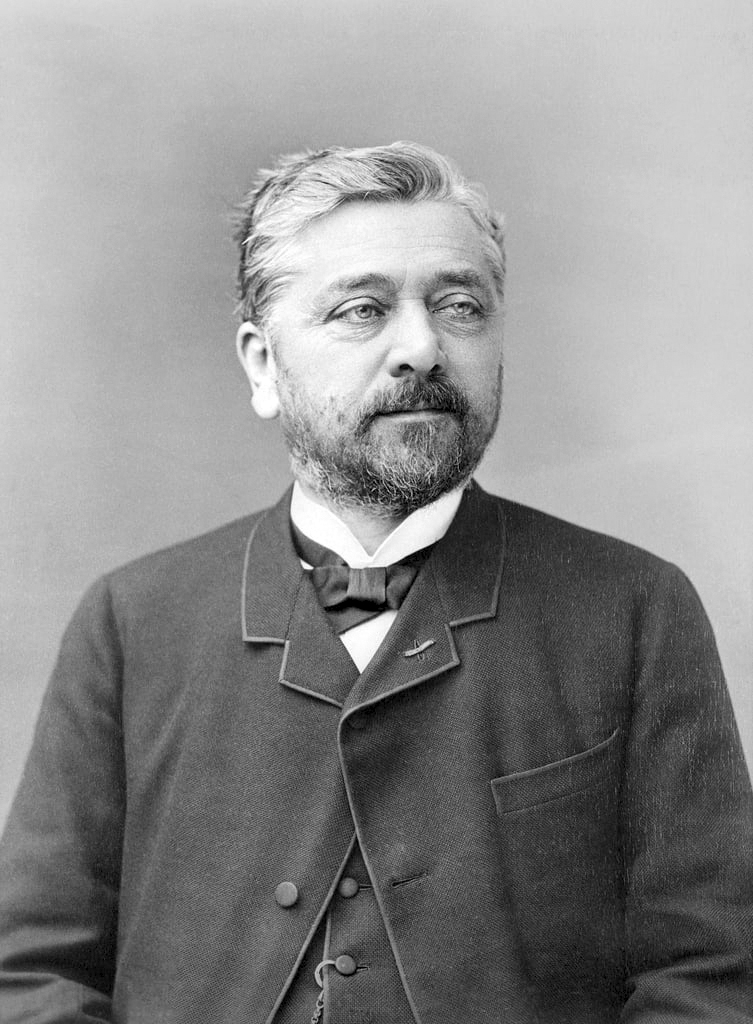
Alexandre Gustave Eiffel
(15 December 1832 – 27 December 1923)


On November 19, 1863, at the dedication of a military cemetery
at Gettysburg, Pennsylvania, during the American Civil War,
President Abraham Lincoln delivered one of the most memorable speeches in American history. In fewer than 275 words, Lincoln
brilliantly and movingly reminded a war-weary public why the
Union had to fight, and win, the Civil War. Lincoln’s address
lasted just two or three minutes.

Four score and seven years ago our fathers brought forth, on this continent, a new nation, conceived in Liberty, and dedicated to the proposition that all men are created equal.
Now we are engaged in a great civil war, testing whether that nation,
or any nation so conceived and so dedicated, can long endure. We
are met on a great battle-field of that war. We have come to dedicate
a portion of that field, as a final resting place for those who here
gave their lives that that nation might live. It is altogether fitting
and proper that we should do this.
But, in a larger sense, we can not dedicate—we can not consecrate—
we can not hallow—this ground. The brave men, living and dead,
who struggled here, have consecrated it, far above our poor power
to add or detract. The world will little note, nor long remember what
we say here, but it can never forget what they did here. It is for us
the living, rather, to be dedicated here to the unfinished work which
they who fought here have thus far so nobly advanced. It is rather
for us to be here dedicated to the great task remaining before us—
that from these honored dead we take increased devotion to that
cause for which they gave the last full measure of devotion—that
we here highly resolve that these dead shall not have died in vain—
that this nation, under God, shall have a new birth of freedom—and
that government of the people, by the people, for the people, shall
not perish from the earth.
Abraham Lincoln
November 19, 1863.


