Archive for the 'Explorer' Category

TODAY IS IDAHO STATEHOOD DAY

July 3, 1890: “We, the People of the State of Idaho” – Constituting America

On July 3, 1890, Idaho entered the Union as the 43rd state.

The name of the new state was first used during the 1850s
to designate a region in what is now Colorado that was later
known as Idaho Springs. 

The word Idaho is derived from the Shoshone Ee-Da-How,
referring possibly to the ubiquitous purple flowers of the
area, but also translated as “gem of the mountains” or
“behold the sun coming down the mountain.”

Idaho was originally part of the vast northwest Oregon, or
Columbia River, country claimed by Spain, Russia, Great
Britain, and the United States.

In 1818 a treaty provided for joint rule of the area by the
United States and Great Britain. At first limited to ten years,
joint rule was later extended.

In 1846 the United States gained sole possession of the
Oregon country below the 49th parallel.

The American  claim to this northwestern area stemmed
primarily from  the explorations by Meriwether Lewis and
William Clark (below) in 1805.    


Lewis and Clark Expedition | South Dakota State University

Lewis and Clark Historical Marker

Physical map of Idaho

Happy National Idaho Day!!!

posted by Bob Karm in ANNIVERSARY,Expedition,Explorer,HISTORY,Statehood,Union and have No Comments

NEWS EVENTS THAT MADE HISTORY

Today in History: July 4 | Holidays | koamnewsnow.com

 Tim maguire        associated-press-news
TIM MAGUIRE
              

Start of the Korean War (1950) - YouTube

On June 25, 1950, armed forces from communist North Korea
smashed into
South Korea, setting off the Korean War.

The United States, acting under the auspices of the United
Nations, quickly sprang to the defense of South Korea and
fought a
bloody and frustrating war for the next three years.

The Korean War was the first “hot” war of the Cold War. Over
55,000 American troops were killed in the conflict.

Korean War Veterans Memorial Foundation

Photos: The Korean War, 70 Years After the Armistice - The New York Times

posted by Bob Karm in ANNIVERSARY,Battle,BIRTHDAY,DEATH,Explorer,HISTORY,Korean war,Testimony and have No Comments

EXPLORES DEPARTED ON THIS DAY IN 1804

Lewis And Clark Expedition

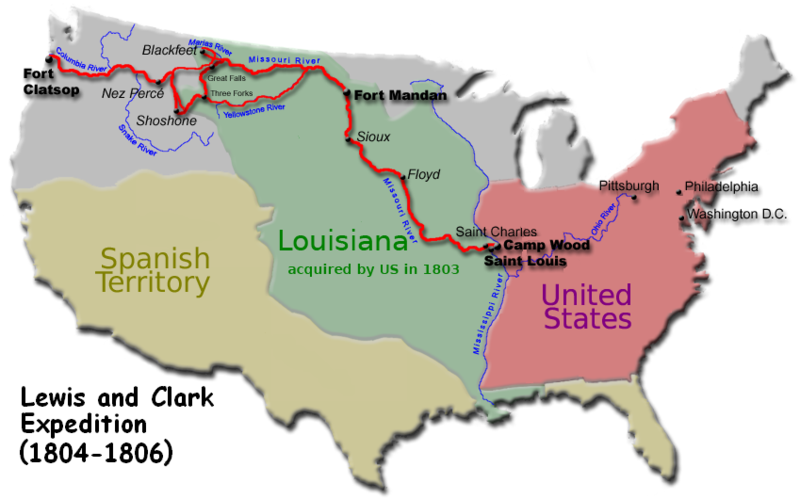
May 14, 1804: One year after the United States doubled its territory
with the
Louisiana Purchase, the Lewis and Clark expedition left St. Louis, Missouri, on a mission to explore  the Northwest from the Mississippi River to the Pacific Ocean.


On November 8, 1805, the expedition arrived at the Pacific Ocean, pausing there for the winter, the explorers began the long journey
back to St. Louis.


Lewis and Clark in Pennsylvania - Conservation HeritageConservation Heritage

The Lewis and Clark Expedition of 1804 –1806 - Owlcation

Lewis and Clark Expedition - Simple English Wikipedia, the free encyclopedia

posted by Bob Karm in ANNIVERSARY,Expedition,Explorer,HISTORY and have No Comments

JOURNEY FOR HOME BEGAN ON THIS DAY

The Lewis and Clark Expedition - Discovering Montana
Conferring with Clatsop Indians at the fort.


After passing a wet and tedious winter near the Pacific Coast,
Lewis and Clark left behind Fort Clatsop and headed east for
home.

The Corps of Discovery arrived at the Pacific the previous
November, having made a difficult crossing over the rugged
Rocky Mountains.

Their winter stay on the south side of the Columbia River—
dubbed Fort Clatsop in honor of the local Native American
tribe—had been plagued by rainy weather and a scarcity of
fresh meat. No one in the Corps of Discovery regretted
leaving Fort Clatsop behind.

In the days before their departure, Captains Lewis and Clark
prepared for the final stage of their journey. Lewis recognized
the possibility that some disaster might still prevent them from
making it back east and he prudently left a list of the names of
all the expedition’s men with Chief Coboway of the Clatsops.

Lewis asked the chief to give the list to the crew of the next
trading vessel that arrived so the world would learn that the
expedition did reach the Pacific.

The months to come would witness some of the most
dangerous moments of the journey, including Lewis’
violent confrontation with members of the Blackfeet tribe
near the Marias River of Montana in July.

Nonetheless, seven months later to the day, on September
23, 1806, the Corps of Discovery arrived at the docks of St.
Louis, where their long journey had begun nearly two and a
half years before.       

Lewis and Clark
    
 Key Events - Lewis, CLark, and the corps of discovery   


posted by Bob Karm in ANNIVERSARY,Expedition,Explorer,HISTORY,Oregon History and have No Comments

‘’DR. LIVINGSTONE, I PRESUME?’’

File:Stanley meets Livingstone cropped.JPG - Wikimedia Commons

Journalist Henry Morton Stanley began his famous search
through Africa for the missing British explorer Dr. David
Livingstone.

In the late 19th century, Europeans and Americans were
fascinated by the continent of Africa. Few did more to
increase Africa’s fame than Livingstone, one of the United
Kingdom’s most famous explorers.

In August 1865, he set out on a planned two-year expedition
to find the source of the Nile River. Livingstone also wanted
to help bring about the abolition of the slave trade, which
was devastating Africa’s population.

Almost six years after his expedition began, little had been
heard from Livingstone. James Gordon Bennett, Jr., editor
of the New York Herald, decided to capitalize on the public’s
craze for news of the explorer. He sent Stanley to lead an
expedition into the African wilderness to find Livingstone
or bring back proof of his death.

Henry Morton Stanley
(1841 – 1904)

David Livingstone, Scottish missionary and explorer - Stock Image -  C040/9664 - Science Photo Library
David Livingstone (1813 – 1873)


The Livingstone–Stanley Monument at
Mugere in Burundi, Africa.
 

posted by Bob Karm in ANNIVERSARY,Explorer,HISTORY,Search and have No Comments