Orson Welles was only 23 years old when his Mercury Theater
company decided to update H.G. Wells’s 19th-century science
fiction novel The War of the Worlds for national radio. Despite
his age, Welles had been in radio for several years, most notably
as the voice of “The Shadow” in the hit mystery program of the
same name. “War of the Worlds” was not planned as a radio
hoax, and Welles had little idea of how legendary it would
eventually become.
The show began on Sunday, October 30, at 8 p.m. A voice
announced: “The Columbia Broadcasting System and its
affiliated stations present Orson Welles and the Mercury
Theater on the air in ‘War of the Worlds’ by H.G. Wells.”
Sunday evening in 1938 was prime-time in the golden age of
radio, and millions of Americans had their radios turned on.
But most of these Americans were listening to ventriloquist
Edgar Bergen and his dummy “Charlie McCarthy” on NBC
and only turned to CBS at 8:12 p.m. after the comedy sketch
ended and a little-known singer went on. By then, the story
of the Martian invasion was well underway.
The radio play was extremely realistic, with Welles employing sophisticated sound effects and his actors doing an excellent
job portraying terrified announcers and other characters. An
announcer reported that widespread panic had broken out in
the vicinity of the landing sites, with thousands desperately
trying to flee.


George Orson Welles (May 6, 1915 – October 10, 1985)


Giovanni Agnelli
(13 August 1866 – 16 December 1945)
Agnelli was an Italian businessman, who
founded Fiat car manufacturing in 1899.
During its more than century-long history,
Fiat has also manufactured railway engines
and carriages, military vehicles, farm tractors,
and aircraft.
In 2013, Fiat (together with Chrysler) was the
second largest European automaker by volumes
produced, and the seventh in the world ahead of
Honda, PSA Peugeot Citroën, Suzuki, Renault,
and Daimler AG.


Front view of the Lingotto headquarters of Fiat
in Turin (2013).

Columbus Day is a national holiday in the United States that commemorates the arrival of Christopher Columbus in the Americas in 1492.
It is observed on the second Monday in October, and many Americans take the day off from work or school to celebrate.
In recent years, some have called for the holiday to be
renamed Indigenous Peoples’ Day and for it to be used
as an opportunity to celebrate the contributions of Native Americans to American society.
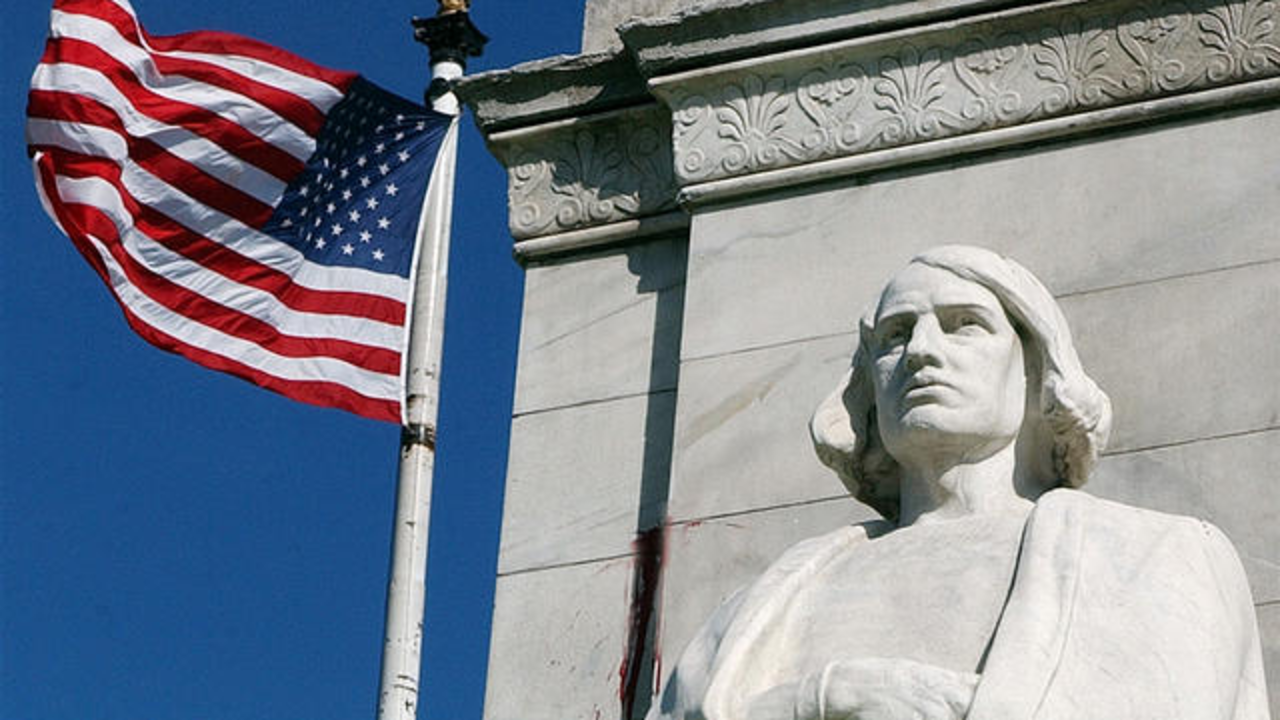
A statue of Christopher Columbus stands at Columbus Circle
in front of Union Station in Washington, D.C. The statue was dedicated to Columbus in June 1912.