Archive for the 'Planet' Category

THE ORBIT OF NEPTUNE CROSSED IN 1983

Pioneer 10 - NASA Science

After more than a decade in space, Pioneer 10, the world’s
first outer-planetary probe, left the outer limits of the known
solar system by crossing the orbit of Neptune, the system’s
then farthest planet.

The following day, it radioed back its first scientific data on
interstellar space.

Pioneer 10 crosses the orbit of Neptune | June 13, 1983 | HISTORY

50 Years Ago: Pioneer 10 Launches to Explore Jupiter - NASA

posted by Bob Karm in ANNIVERSARY,HISTORY,NASA,Planet,Space probe and have No Comments

MOONS OF JUPITER DISCOVERED IN 1610

Galileo Galilei: The Great Scientist | by Danish Chaglani | Science and Philosophy | Jan, 2021 ...
Galileo di Vincenzo Bonaiuti de’ Galilei
(15 February 1564 – 8 January 1642)

With eight planets in our solar system, more than 200 moons
surround those natural satellites.

Jupiter, one of the most recognizable planets, has 80 of those
moons.

On this day in history, Jan. 7, 1610, Galileo discovered the
moons of Jupiter — making it the first observation of this
planet.
 

Galileo Galilei Discovers the Moons of Jupiter and the Phases of Venus - Owlcation
The astronomer discovered the moons with a homemade
telescope.

undefined
Galileo’s "cannocchiali"
telescopes.

undefined
Tomb of Galileo, Santa Croce, Florence.


posted by Bob Karm in ANNIVERSARY,Astronomy,Discovered,HISTORY,Planet and have No Comments

PLANET DISCOVERED ON THIS DAY IN 1846

German astronomer Johann Gottfried Galle (below) 
discovered the planet Neptune at the Berlin
Observatory.

undefined
Johann Gottfried Galle
(9 June 1812 – 10 July 1910)

The Berlin Observatory, Germany Drawing by Mary Evans Picture Library | Fine Art America
The the Berlin Observatory. 

9-inch Fraunhofer Refractor, Deutsches Museum, Munich | Flickr
The 1829 9"/24cm refractor telescope of New Berlin
Observatory that discovered Neptune.


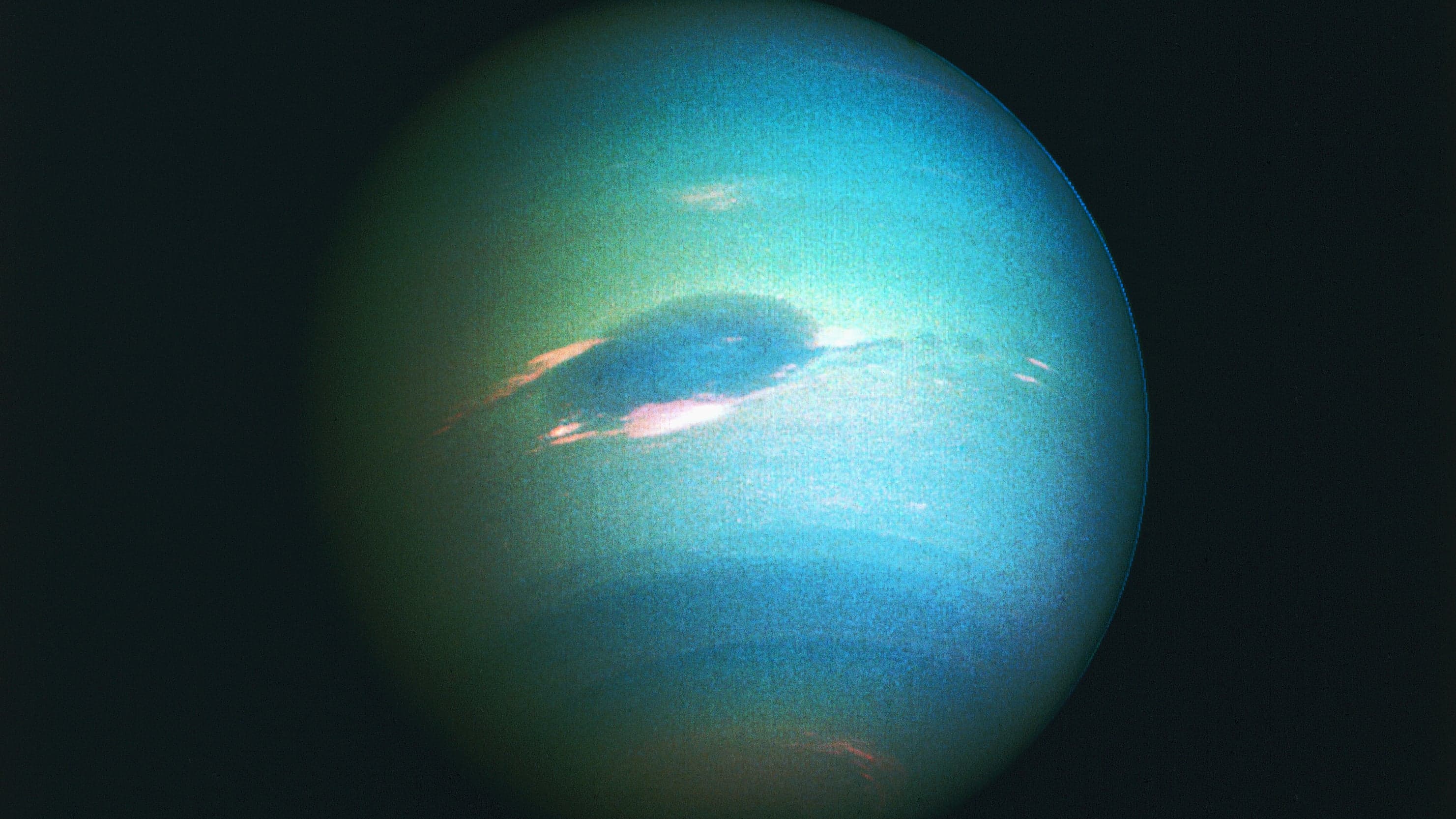
Artist's impression of planet Neptune - Stock Image - R420/0036 - Science Photo Library
Artist’s impression of the planet Neptune.

The blue gas giant, which has a diameter four
times that of Earth, was named for the Roman
god of the sea. It has eight known moons, of
which Triton is the largest, and a ring system
containing three bright and two dim rings.

It completes an orbit of the sun once every
165 years. In 1989, the U.S. planetary
spacecraft Voyager 2 was the first human
spacecraft to visit Neptune.

posted by Bob Karm in ANNIVERSARY,Astronomy,Discovery,HISTORY,Observatory,Planet and have No Comments

TODAY IN HISTORY FROM THE AP

Today-In-Historytitle

MikeGracia1
MIKE GRACIA

Image result for Richard Speck Newspaper

Pin on Headlines

Richard SPECK | Серийные убийцы

Pin on The News - Drama, Trauma, & Astonishment

30 best images about ASSASSINS/KILLER on Pinterest | On august, Evil people and Belle gunness
Richard Benjamin Speck
(December 6, 1941 – December 5, 1991)

posted by Bob Karm in ANNIVERSARY,BIRTHDAY,DEATH,HISTORY,Mars,MUSIC,NASA,NEWSPAPER,Outlaw,Planet,Singer/Songwriter,Space probe and have No Comments

PIONEER 10 WAS LAUNCHED ON THIS DAY

Pioneer 10 Launch | NASA Solar System Exploration

Pioneer 10, the world’s first outer-planetary probe,was
launched from Cape Canaveral,
Florida, on a mission to
Jupiter, the solar system’s largest planet, on this day
in 1972.

In December 1973, after successfully negotiating the
asteroid belt and a distance of 620 million miles,
Pioneer 10 reached Jupiter and sent back to Earth
the first close-up images of the spectacular gas giant.

In June 1983, the NASA spacecraft left the solar system
and the next day radioed back the first scientific data on
interstellar space. NASA officially ended the Pioneer 10
project on March 31, 1997, with the spacecraft having
traveled a distance of some six billion miles.

March 1972 - Pioneer 10 Launched | NASA

posted by Bob Karm in ANNIVERSARY,HISTORY,Launch,NASA,Planet,Spacecraft and have No Comments