

TIM MAGUIRE


TIM MAGUIRE
June 18, 1812: The day after the Senate followed the House of Representatives in voting to declare war against Great Britain,
President James Madison signed the declaration into law—and
the War of 1812 began.
The American war declaration, opposed by a sizable minority
in Congress, had been called in response to the British
economic blockade of France, the induction of American
seaman into the British Royal Navy against their will, and
the British support of Indian tribes along the Great Lakes
frontier.
A faction of Congress known as the “War Hawks” had
been advocating war with Britain for several years and
had not hidden their hopes that a U.S. invasion of Canada
might result in significant territorial land gains for the
United States.

James Madison (March 16, 1751 – June 28, 1836)


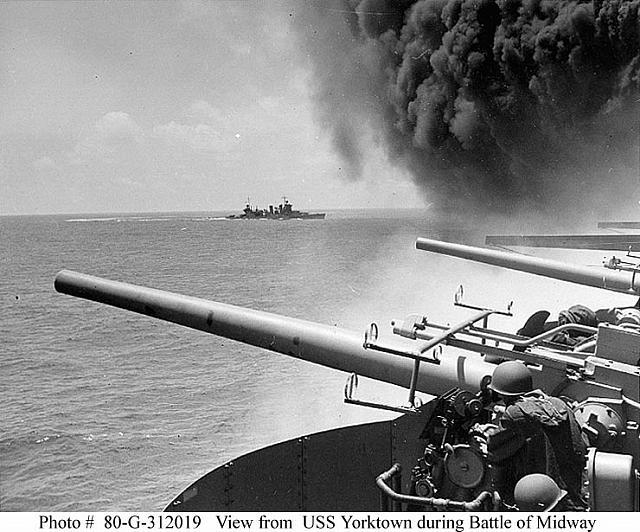
On June 4, 1942, the Battle of Midway—one of the most decisive
U.S. victories against Japan during World War II—began.
During the four-day sea-and-air battle, the outnumbered U.S.
Pacific Fleet succeeded in destroying four Japanese aircraft
carriers while losing only one of its own, the Yorktown, to the
previously invincible Japanese navy.



On May 8, 1945, both Great Britain and the United States
celebrated Victory in Europe Day. Cities in both nations,
as well as formerly occupied cities in Western Europe,
put out flags and banners, rejoicing in the defeat of the
Nazi war machine during World War II.


Canadian soldiers celebrating VE-Day, Piccadilly Circus, London, England.


On April 29, 2004, the World War II Memorial opened in
Washington, D.C. to thousands of visitors, providing
overdue recognition for the 16 million U.S. men and
women who served in the war. The memorial is located
on 7.4 acres on the former site of the Rainbow Pool at
the National Mall between the Washington Monument
and the Lincoln Memorial. The Capitol dome is seen to
the east, and Arlington Cemetery is just across the
Potomac River to the west.


