
February 23, 1945: During the bloody Battle for Iwo Jima, U.S.
Marines from the 3rd Platoon, E Company, 2nd Battalion, 28th
Regiment of the 5th Division took the crest of Mount Suribachi,
the island’s highest peak and most strategic position, and raised
the U.S. flag.
Marine photographer Louis Lowery, who was with them, recorded
the event. Americans fighting for control of Suribachi’s slopes
cheered the raising of the flag.
Several hours later, more Marines headed up to the crest with a
larger flag. Joe Rosenthal, a photographer with the Associated
Press, met them along the way and recorded the raising of the
second flag along with a Marine still photographer and a motion-
picture cameraman.
By March 3, U.S. forces controlled all three airfields on the island,
and on March 26 the last Japanese defenders on Iwo Jima were
wiped out. Only 200 of the original 22,000 Japanese defenders
were captured alive. More than 6,000 Americans died taking Iwo
Jima, and some 17,000 were wounded.



The second Iwo Jima flag on display in the National Museum
of the Marine Corps.
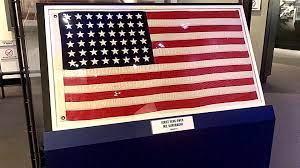
The first U.S. flag raised on Mount Suribachi.


President Harry Truman, left, is presented with a bronze
statue by sculptor Felix de Weldon, center, and Associated
Press photographer Joe Rosenthal at the White House in Washington on June 4, 1945.

Mount Suribachi on Iwo Jima as it looks today.


