On February 19, 1847, the first rescuers reach surviving members
of the Donner Party, a group of California-bound emigrants stranded
by snow in the Sierra Nevada Mountains.
In the summer of 1846, in the midst of a Western-bound fever
sweeping the United States, 89 people—including 31 members
of the Donner and Reed families—set out in a wagon train from Springfield, Illinois.
After arriving at Fort Bridger, Wyoming, the emigrants decided to
avoid the usual route and try a new trail recently blazed by
California promoter Lansford Hastings, the so-called “Hastings
Cutoff.”
After electing George Donner as their captain, the party departed
Fort Bridger in mid-July.
The shortcut was nothing of the sort: It set the Donner Party back
nearly three weeks and cost them much-needed supplies. After
suffering great hardships in the Wasatch Mountains, the Great Salt
Lake Desert and along the Humboldt River, they finally reached the
Sierra Nevada Mountains in early October.
Despite the lateness of the season, the emigrants continued to press
on, and on October 28 they camped at Truckee Lake, located in the
high mountains 21 kilometers northwest of Lake Tahoe. Overnight,
an early winter storm blanketed the ground with snow, blocking the mountain pass and trapping the Donner Party.


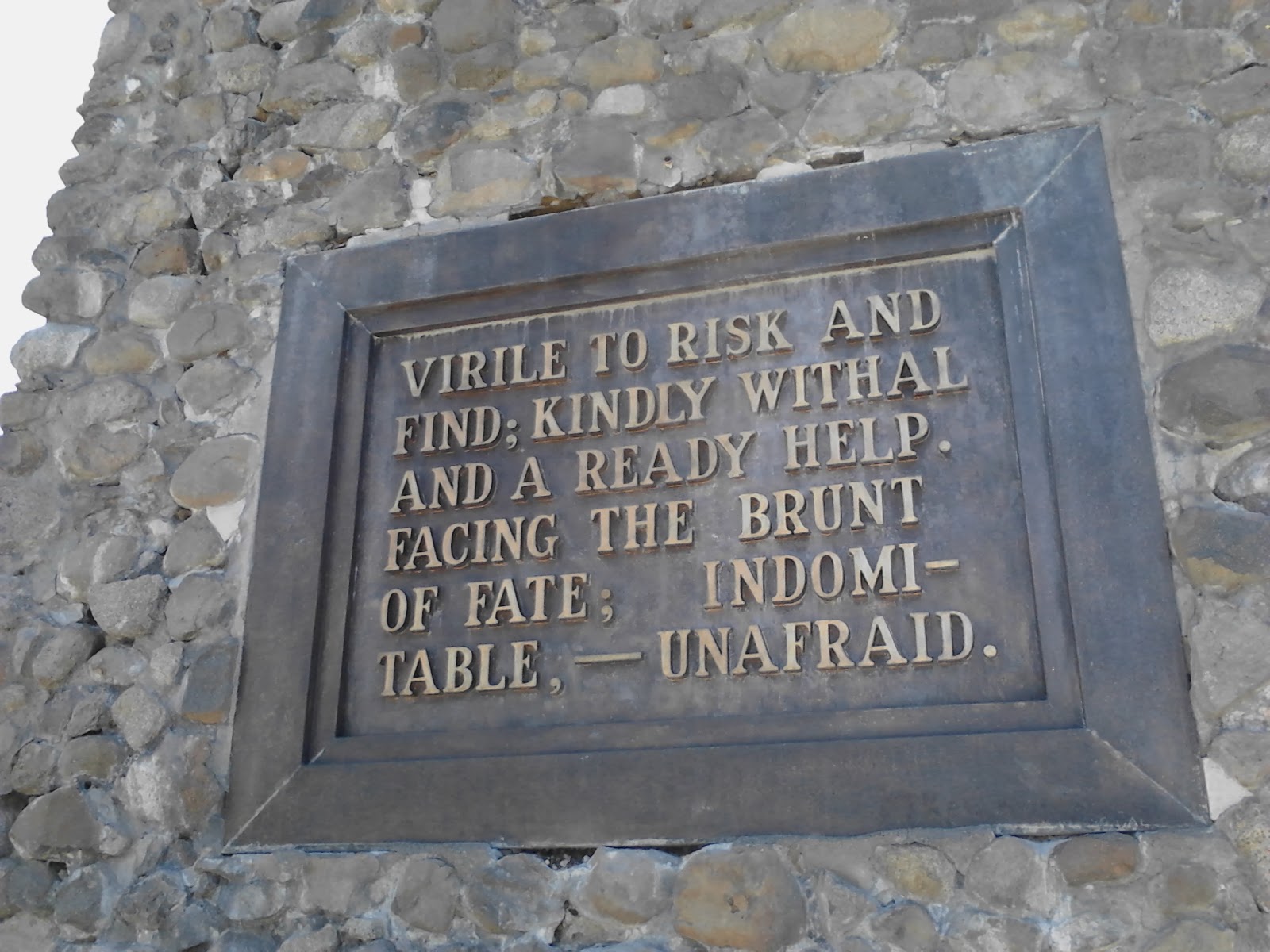
Donner Party Monument at Donner Memorial State Park
Truckee, California.