Singer-songwriter Neil Diamond has sold more than 130 million
records worldwide, making him one of the best-selling musicians
of all time. He has written and recorded ten singles that reached
No. 1 on the Billboard Hot 100.


Singer-songwriter Neil Diamond has sold more than 130 million
records worldwide, making him one of the best-selling musicians
of all time. He has written and recorded ten singles that reached
No. 1 on the Billboard Hot 100.
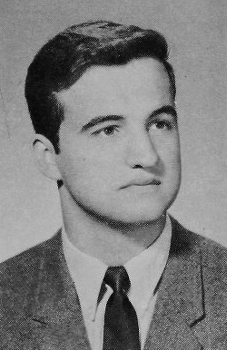
Belushi as a senior at Wheaton Central High School (1967)

John Adam Belushi (January 24, 1949 – March 5, 1982)
Born in Chicago, Illinois.
Belushi was a comedian, actor and musician who was one
of seven Saturday Night Live cast members of the first
season on NBC.
During a preliminary hearing held in September 1985, two
Los Angeles pathologists testified that Belushi’s cause of
death was due to a drug overdose. He was 33.

“Blues Brothers” with Dan Aykroyd and John Belushi (1980)

Bluto (John Belushi): "See if you can guess what I am now."
”Animal House” (1978)




Charles Curtis of Kansas became the first Native American to
be elected to the United States Senate on January 23, 1907.
His tenure later as Herbert Hoover’s vice president (below)
made him the highest-ranking Native American ever to serve
in the federal government.


SANDY KOZEL


John William Carson (October 23, 1925 – January 23, 2005)

Lyndon Baines Johnson ( August 27, 1908 – January 22, 1973)

Johnson was sworn into office following the November
1963 assassination of President John F. Kennedy.
President Lyndon Johnson launched an ambitious slate of
progressive reforms aimed at creating a “Great Society”
for all Americans. Many of the programs he championed—
Medicare, Head Start, the Voting Rights Act and the Civil
Rights Act—had a profound and lasting impact on health,
education and civil rights.

President Lyndon B Johnson Lifts his Beagle by the Ears. The
incident, called canine cruelty by some, occurred in 1964.


