


On March 13, 1865, with the main Rebel armies facing long
odds against much larger Union armies, the Confederacy,
in a desperate measure, reluctantly approved the use of
Black troops.
The situation was bleak for the Confederates in the spring
of 1865. The Yankees had captured large swaths of Southern
territory, General William T. Sherman’s Union army was tearing
through the Carolinas, and General Robert E. Lee was trying
valiantly to hold the Confederate capital of Richmond, Virginia,
against General Ulysses S. Grant’s growing force.


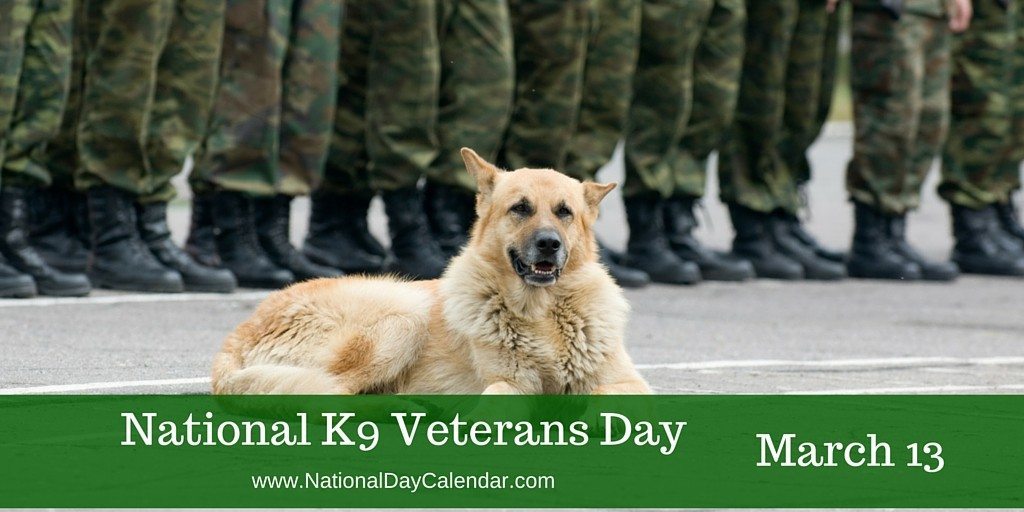
On March 13, 1942, the Quartermaster Corps of the United States
Army began training dogs for the newly established War Dog
Program, or “K-9 Corps.”Well over a million dogs served on both
sides during World War I, carrying messages along the complex
network of trenches and providing some psychological comfort
to the soldiers.
The most famous dog to emerge from the war was Rin Tin Tin,
an abandoned puppy of German war dogs found in France in
1918 and taken to the United States, where he made his film
debut in the 1922 silent film The Man from Hell’s River.
As the first bona fide animal movie star, Rin Tin Tin made the
little-known German Shepherd breed famous across the
country.


March 13, 1852 — Frank Bellew’s cartoon, “Uncle Sam,”
made its debut in the NY Lantern Weekly.
The character’s name is attributed to Samuel Wilson, a
meat packer who supplied food to the troops during the
War of 1812. Legend has it that he conspicuously marked
“U.S.” on the packages and before long the soldiers took
to calling him “Uncle Sam.”
However, the first use in literature of the concept of the
patriot Uncle Sam was in the 1816 book, “The Adventures
of Uncle Sam in Search After His Lost Honor,” by Frederick
Augustus Fidfaddy, Esq.
Uncle Sam is mentioned as early as 1775, in the original
“Yankee Doodle” lyrics of the American Revolutionary
War.

Frank Henry Temple Bellew
(April 18, 1828 – June 29, 1888)

Samuel Wilson (September 13, 1766 – July 31, 1854)

On March 12, 1933, eight days after his inauguration, President
Franklin D. Roosevelt gives his first national radio address—or
“fireside chat”—broadcast directly from the White House.
Roosevelt began that first address simply: “I want to talk for a
few minutes with the people of the United States about banking.”
He went on to explain his recent decision to close the nation’s
banks in order to stop a surge in mass withdrawals by panicked investors worried about possible bank failures.
The banks would be reopening the next day, Roosevelt said, and
he thanked the public for their “fortitude and good temper”
during the “banking holiday.”


