(Fox News) – NASA on Thursday shared an image taken by the James Webb Telescope showing the first-ever direct image of a planet outside our solar system.
NASA says the exoplanet, HIP 65426 b, is a gas giant, meaning it has no rocky surface and could not be habitable. The image can be seen through different bands of infrared light.
Sasha Hinkley, associate professor of physics and astronomy at the University of Exeter in the United Kingdom, who led the observations, called the images a "transformative moment, not only for Webb but also for astronomy generally."
The James Webb Space Telescope.
The James Webb Space Telescope was launched on 25 December 2021 on an Ariane 5 rocket from Kourou, French Guiana, and arrived at the Sun–Earth L2Lagrange point in January 2022.
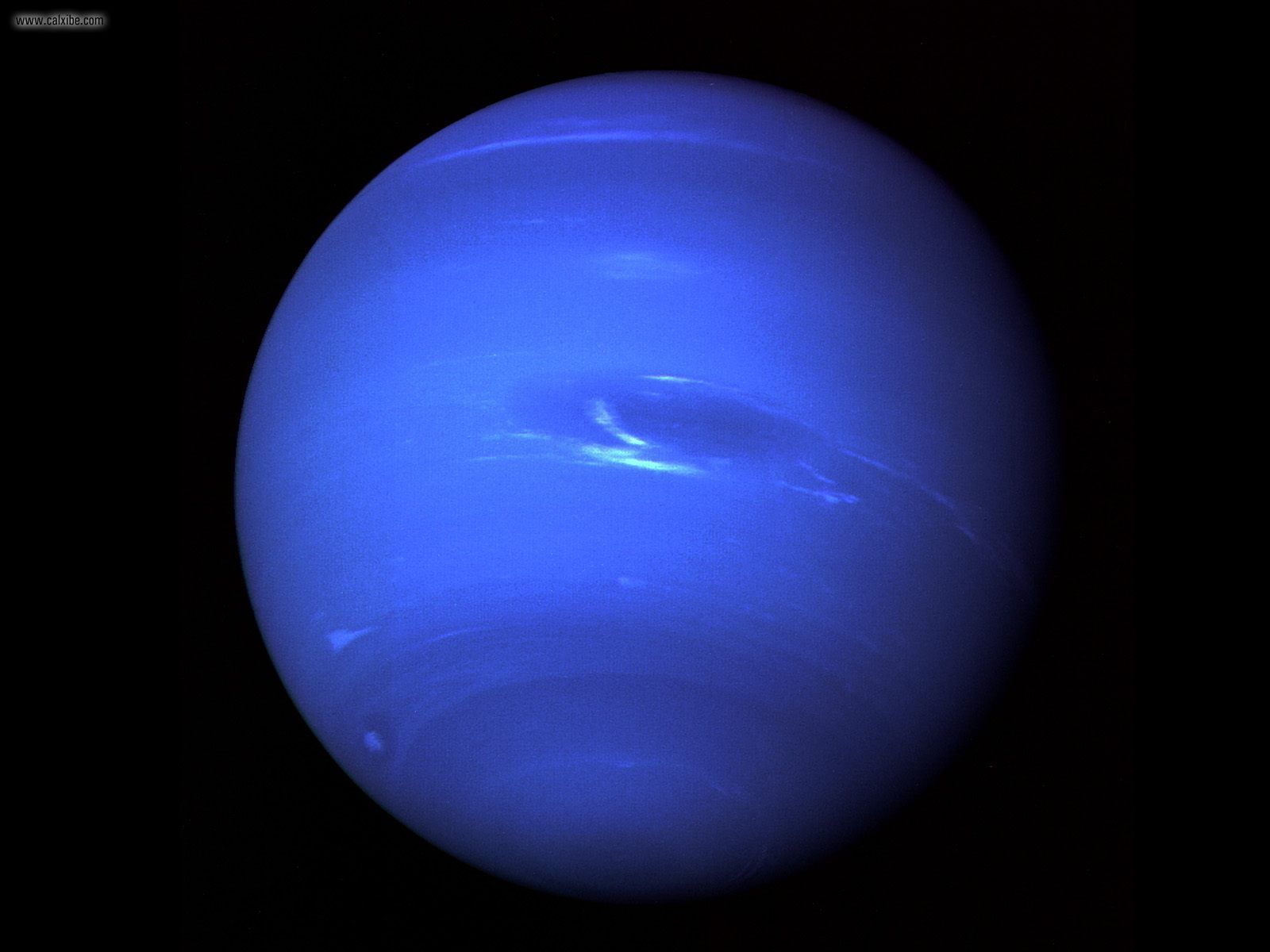
German astronomer Johann Gottfried Galle discovered the planet Neptune at the Berlin Observatory.
Neptune, generally the eighth planet from the sun, was postulated by the French astronomer Urbain-Jean-Joseph Le Verrier, who calculated the approximate location of the planet by studying gravity-induced disturbances in the motions of Uranus. On September 23, 1846, Le Verrier informed Galle of his findings, and the same night Galle and his assistant Heinrich Louis d’Arrest identified Neptune at their observatory in Berlin. Noting its movement relative to background stars over 24 hours confirmed that it was a planet.
The blue gas giant, which has a diameter four times that of Earth, was named for the Roman god of the sea. It has eight known moons, of which Triton is the largest, and a ring system containing three bright and two dim rings. It completes an orbit of the sun once every 165 years. In 1989, the U.S. planetary spacecraft Voyager 2 was the first human spacecraft to visit Neptune.
1838 painting of the New Berlin Observatory.
Johann Gottfried Galle (June 9, 1812 – July 10, 1910)
Mount Vesuvius erupted killing approximately 20,000 people on this day in 79 AD. The cities of Pompeii, Stabiae and Herculaneum were buried in volcanic ash.
The above Photos of Plaster casts were made from actual victims trapped in the lava flows of the ancient Roman city of Pompeii, Italy.
.
Florida City: Gary Davis cradles his chihuahua Boo Boo in front of his mobile home in the Goldcoaster Mobile Home Park the morning after Hurricane Andrew.
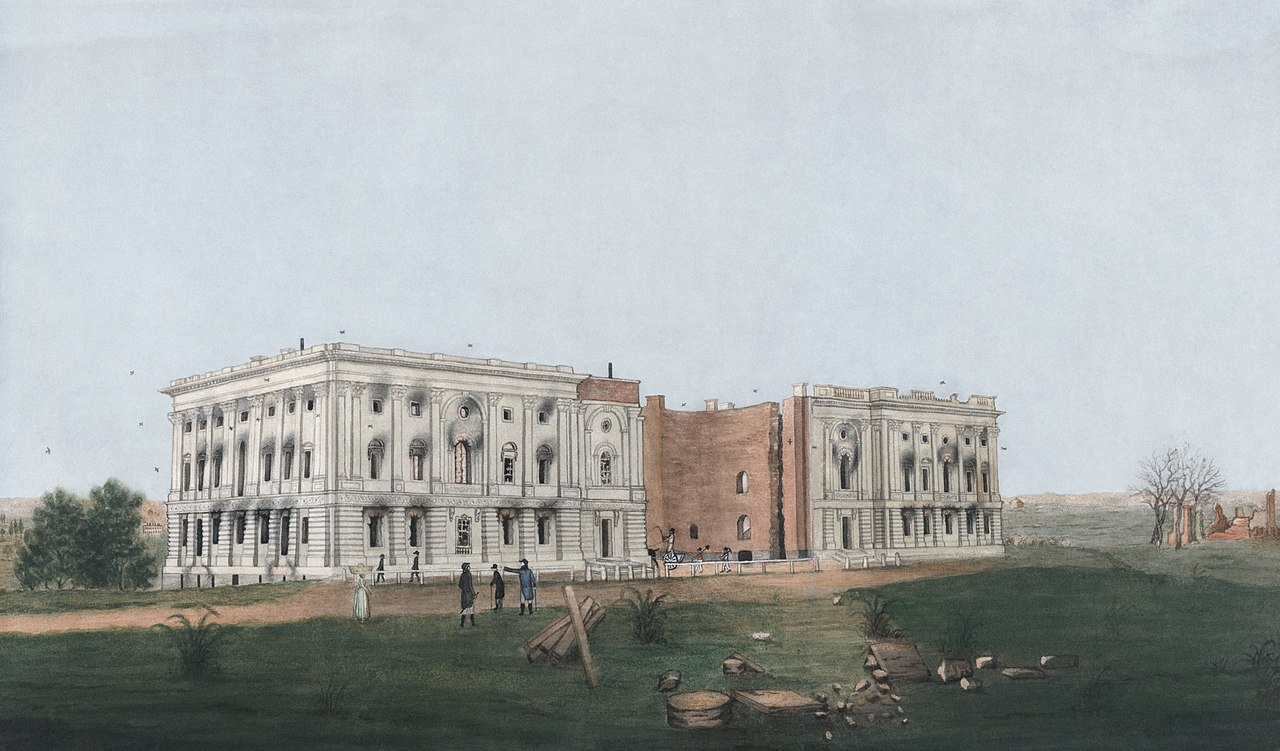
Washington, DC, was invaded by British forces that set fire to the White House and Capitol on this day in 1814.
An artists depiction of the White House ruins after the conflagration of August 24, 1814.
The planet Pluto was reclassified as a "dwarf planet" by the International Astronomical Union on this day in 2006. Pluto’s status was changed due to the IAU’s new rules for an object qualifying as a planet. Pluto met two of the three rules because it orbits the sun and is large enough to assume a nearly round shape. However, since Pluto has an oblong orbit and overlaps the orbit of Neptune it disqualified Pluto as a planet.
On this day in 1932, Amelia Earhart became the first woman to fly across the U.S. non-stop. The trip from Los Angeles, CA to Newark, NJ, took about 19 hours.