

Joseph Robinette Biden Jr. is the 46th and current president
of the United States. A member of the Democratic Party, he
previously served as the 47th vice president from 2009 to
2017 under President Barack Obama, and represented
Delaware in the United States Senate from 1973 to 2009.

On November 19, 1863, at the dedication of a military
cemetery at Gettysburg, Pennsylvania, during the
American Civil War, President Abraham Lincoln
delivered one of the most memorable speeches in
American history. In fewer than 275 words, Lincoln
brilliantly and movingly reminded a war-weary public
why the Union had to fight, and win, the Civil War.
The Battle of Gettysburg, fought some four months
earlier, was one of the single bloodiest battle of the
Civil War. Over the course of three days, more than
45,000 men were killed, injured, captured or went
missing.
The battle also proved to be the turning point of the war:
General Robert E. Lee’s defeat and retreat from Gettysburg
marked the last Confederate invasion of Northern territory
and the beginning of the Southern army’s ultimate decline.


COMILLE BOHANNON


Film director Martin Charles Scorsese is 80 years old today.


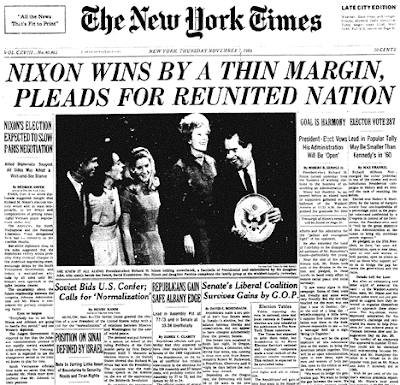
Winning one of the closest elections in U.S. history, Republican challenger Richard Nixon defeated Vice President Hubert
Humphrey November 5, 1968. Because of the strong showing
of third-party candidate George Wallace, neither Nixon nor
Humphrey received more than 50 percent of the popular vote;
Nixon beat Humphrey by less than 500,000 votes.
Nixon campaigned on a platform designed to reach the “silent
majority” of middle class and working class Americans. He
promised to “bring us together again,” and many Americans,
weary after years of antiwar and civil rights protests, were
happy to hear of peace returning to their streets. Foreign
policy was also a major factor in the election.