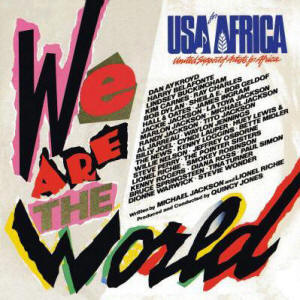
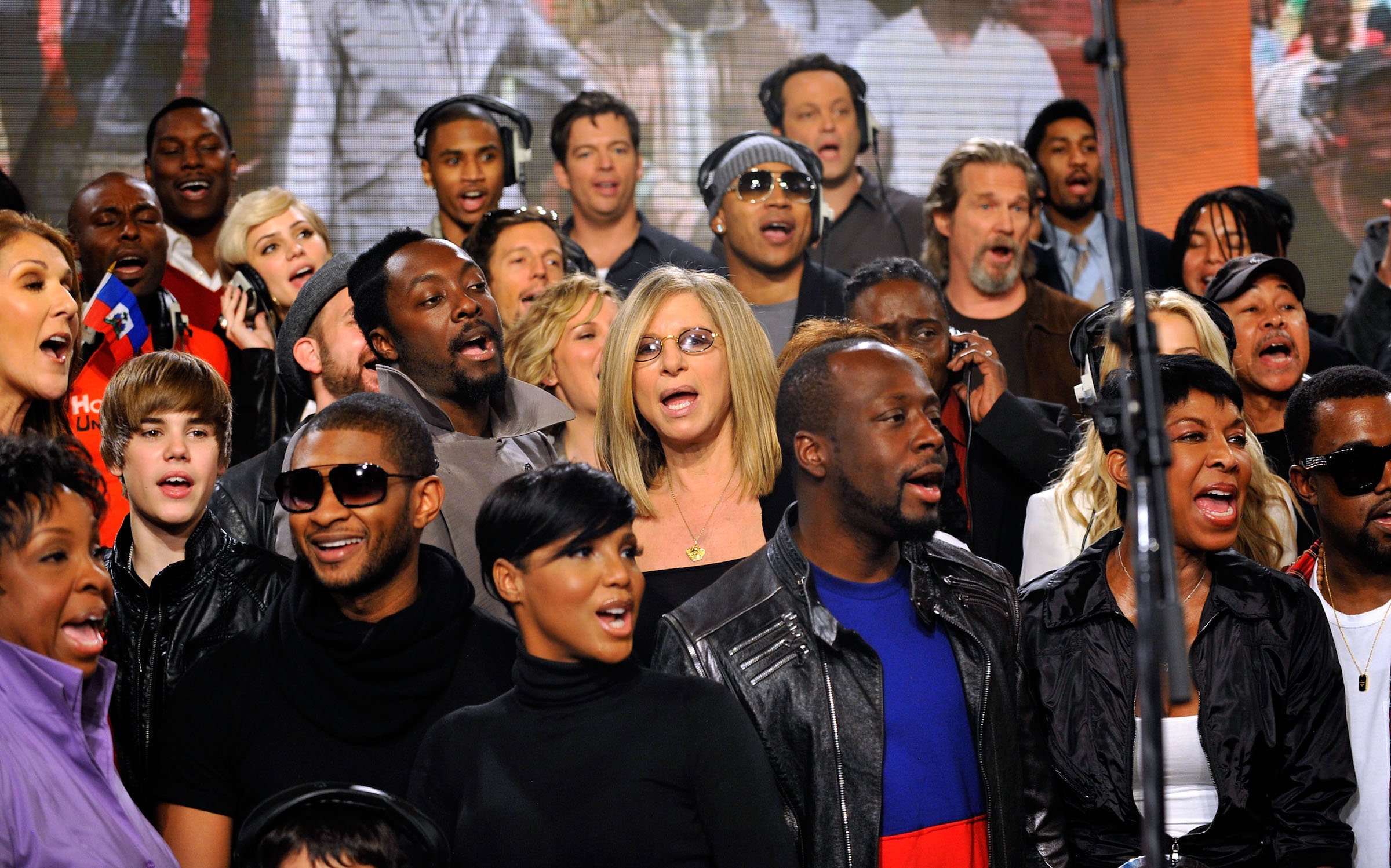
The special instruction Quincy Jones sent out to the several dozen pop stars invited to participate in the recording of “We Are the World” was this: “Check your egos at the door.” Jones was the producer of a record that would eventually go on to sell more than 7 million copies and raise more than $60 million for African famine relief. But before “We Are the World” could achieve those feats, it had to be captured on tape—no simple feat considering the number of major recording artists slated to participate.
With only one chance to get the recording the way he and writers Michael Jackson and Lionel Richie wanted it, Jones convened the marathon recording session of “We Are the World” at around 10 p.m. on the evening of January 28, 1985, immediately following the conclusion of the American Music Awards ceremony held just a few miles away.
Singer/actor/activist Harry Belafonte was the initiator of the events that led to the recording of “We Are the World.”
Quincy Jones will be 91 in March.
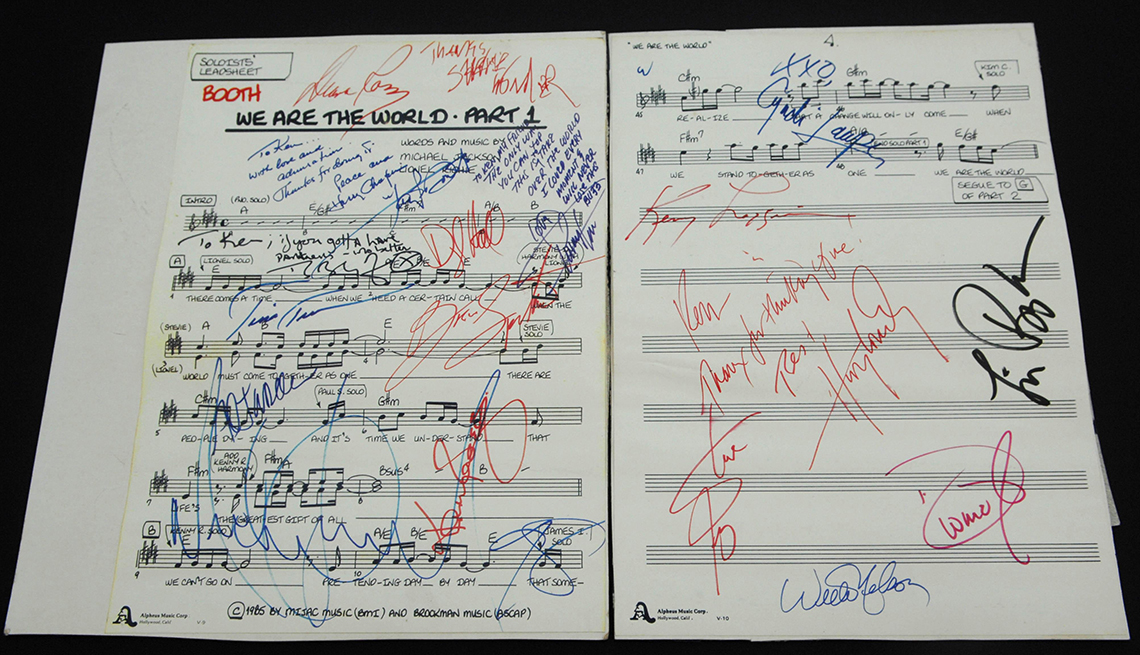
A soloist booth song sheet used for the 1985 recording of ‘We Are the World’, individually signed by the artists involved.
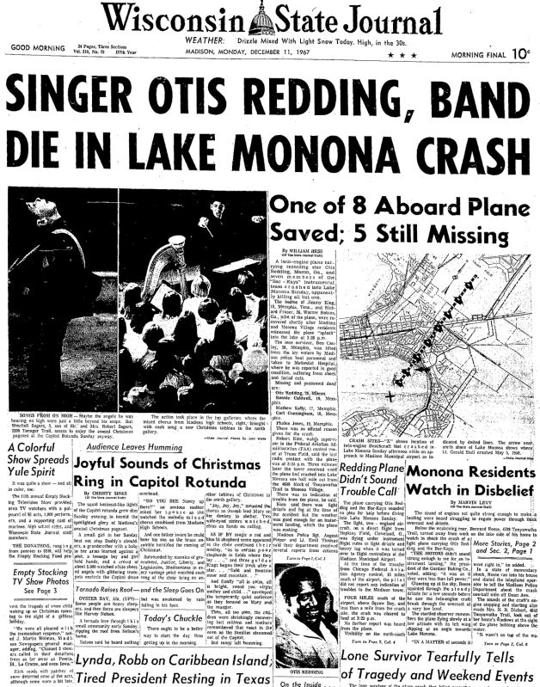
On its final approach to Madison, Wisconsin on December 10, 1967, the private plane carrying soul-music legend Otis Redding (26)crashed into the frigid waters of a small lake three miles short of the runway, killing seven of the eight men aboard, including Redding. “Sittin’ On The Dock Of The Bay”, which he had been recording, would be released in its “unfinished” form several weeks later, with Redding’s whistled verse a seemingly indispensable part of the now-classic record and would soon become history’s first posthumous #1 hit and the biggest pop hit of Redding’s career.