From left: Freeman Gosden and Charles Correll going over
the script for the popular Amos and Andy radio program.
On January 12, 1926, the two-man comedy series “Sam ‘n’ Henry”
debuts on Chicago’s WGN radio station. Two years later, after
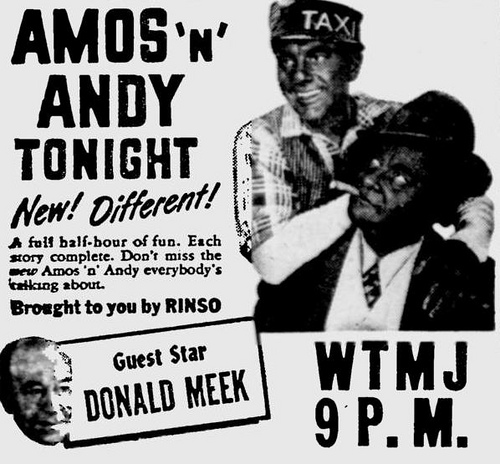
changing its name to “Amos ‘n’ Andy,” the show became one of
the most popular radio programs in American history.
Though the creators and the stars of the new radio program,
Freeman Gosden and Charles Carrell, were both white, the
characters they played were two Black men from the Deep
South who moved to Chicago to seek their fortunes. By that
time, white actors performing in dark stage makeup—or
“blackface”—had been a significant tradition in American
theater for over 100 years. Gosden and Carrell, both vaudeville
performers, were doing a Chicago comedy act in blackface
when an employee at the Chicago Tribune suggested they
create a radio show.