![]()


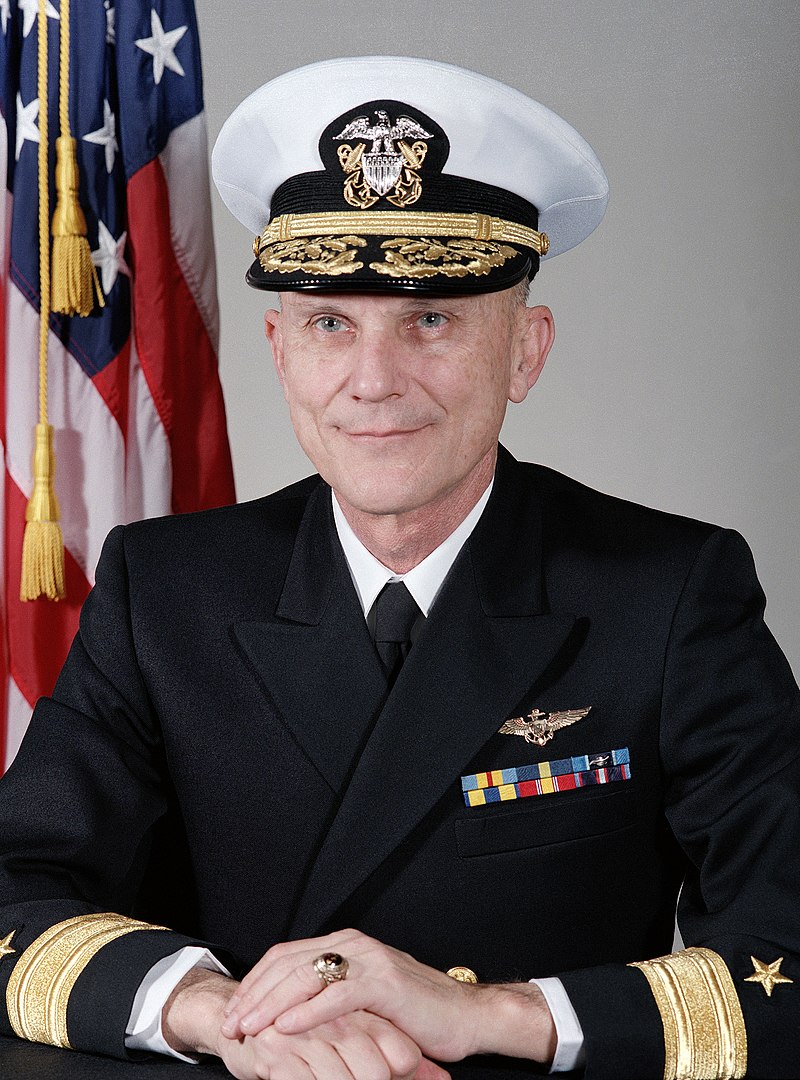
NASA announced Thursday, Thomas K. Mattingly, a key
commander during the Apollo 16 mission to the moon,
died on October 31 at age 87.
NASA administrator Bill Nelson said “Astronaut Mattingly
was key to the success of our Apollo Program, and his
shining personality will ensure he is remembered throughout
history."
Mattingly in Navy uniform.
Apollo 16
The Hughes Flying Boat—at one time the largest aircraft ever built—
is piloted by designer Howard Hughes on its first and only flight.
Built with laminated birch and spruce (hence the nickname the
Spruce Goose) the massive wooden aircraft had a wingspan
longer than a football field and was designed to carry more
than 700 men to battle.

The aircraft is on display at the Evergreen Aviation & Space Museum located in McMinnville, Oregon.

U.S. Air Force Captain Chuck Yeager became the first person
to fly faster than the speed of sound.
Yeager, born in Myra, West Virginia, in 1923, was a combat
fighter during World War II and flew 64 missions over Europe.
He shot down 13 German planes and was himself shot down
over France, but he escaped capture with the assistance of
the French Underground.
After the war, he was among several volunteers chosen to test-
fly the experimental X-1 rocket plane, built by the Bell Aircraft
Company to explore the possibility of supersonic flight.
Brigadier General Charles Elwood Yeager
(February 13, 1923 – December 7, 2020)
John Denver (Henry John Deutschendorf Jr.)
(December 31, 1943 – October 12, 1997)
To those who bought records like “Rocky Mountain High”
and “Take Me Home, Country Roads” by the millions in
the 1970s, John Denver was much more than just a great
songwriter and performer.
With his oversized glasses, bowl haircut and down vest,
he was an unlikely fashion icon, and with his vocal
environmentalism, he was the living embodiment of an
outdoorsy lifestyle that many 20-something baby boomers
would adopt as their own during the “Me” decade.
There never was and there probably never will be a star
quite like John Denver, who died on October 12, 1997
when his experimental amateur aircraft (below) crashed
into Monterey Bay on the California coast.

Quote from the NTSB Report: "The National Transportation Safety
Board determined the probable cause of the accident was the
pilot’s diversion of attention from the operation of the airplane
and his inadvertent application of right rudder that resulted in
the loss of airplane control while attempting to manipulate the
fuel selector handle.