

CAMILLE BOHANNON

President Richard M. Nixon told an Associated Press managing editors
meeting in Orlando, FL, "people have got to know whether or not their
president is a crook. Well, I’m not a crook."

CAMILLE BOHANNON
President Richard M. Nixon told an Associated Press managing editors
meeting in Orlando, FL, "people have got to know whether or not their
president is a crook. Well, I’m not a crook."

(CNN) — The last survivor of the Hindenburg airship disaster, Werner Gustav Doehner (shown below) has died from complications of pneumonia.
According to his family, Doehner passed away at a hospital in Laconia, New Hampshire, on November 8.
Werner Doehner was 8 years old (below) on May 6, 1937, when the infamous
airship went up in flames and crashed in Lakehurst, New Jersey, killing 36
people. Doehner’s sister and father were among them. Sixty-two people
survived.


Werner G. Doehner

Navy crewmen are seen running from the crashing Zeppelin in 1937.


An injured survivor of the Hindenburg disaster calmly smokes a
cigarette as he is moved to a hospital from the field at Lakehurst,
New Jersey.

Another survivor is led away from the burning
gondola of the Hindenburg.

John Fitzgerald Kennedy (May 29, 1917 – November 22, 1963)
President John F. Kennedy decided to increase military aid to South Vietnam without committing U.S. combat troops.
Kennedy was concerned at the advances being made by the communist Viet
Cong, but did not want to become involved in a land war in Vietnam. He
hoped that the military aid would be sufficient to strengthen the Saigon
government and its armed forces against the Viet Cong. Ultimately it was
not, and Kennedy ended up sending additional support in the form of U.S.
military advisors and American helicopter units. By the time of his
assassination in 1963, there were 16,000 U.S. soldiers in South
Vietnam.

U.S. adviser training Montagnard’s at a fortified camp near Buon Me Thout in central Vietnam.


CAMILLE
BOHANNON
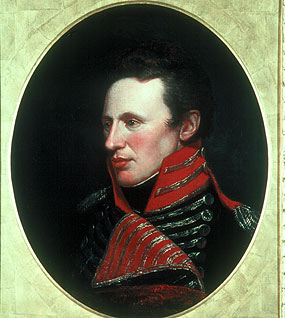
Zebulon Montgomery Pike
(January 5, 1779 – April 27, 1813)

Approaching the Colorado foothills of the Rocky Mountains during his second exploratory expedition, Lieutenant Zebulon Pike spots a distant mountain peak
that looks “like a small blue cloud.” The mountain was later named Pike’s Peak
in his honor.
Pike’s explorations of the newly acquired Louisiana Territory of the U.S. began before the nation’s first western explorers, Lewis and Clark, had returned from
their own expedition up the Missouri River. Pike was more of a professional
military man than either Lewis or Clark, and he was a smart man who had
taught himself Spanish, French, mathematics, and elementary science. When
the governor of Louisiana Territory requested a military expedition to explore
the headwaters of the Mississippi, General James Wilkinson picked Pike to
lead it.


Moby-Dick is now considered a great classic of American literature and
contains one of the most famous opening lines in fiction: “Call me Ishmael.” Initially, though, the book about Captain Ahab and his quest to catch a giant
white whale was a flop.
Its author, Herman Melville was born in New York City in 1819. As a young
man, he spent time in the merchant marines, the U.S. Navy and on a whaling
ship in the South Seas. In 1846, he published his first novel, Typee, a
romantic adventure based on his experiences in Polynesia. The book was
a success and a sequel, Omoo, was published in 1847. Three more novels
followed, with mixed critical and commercial results.
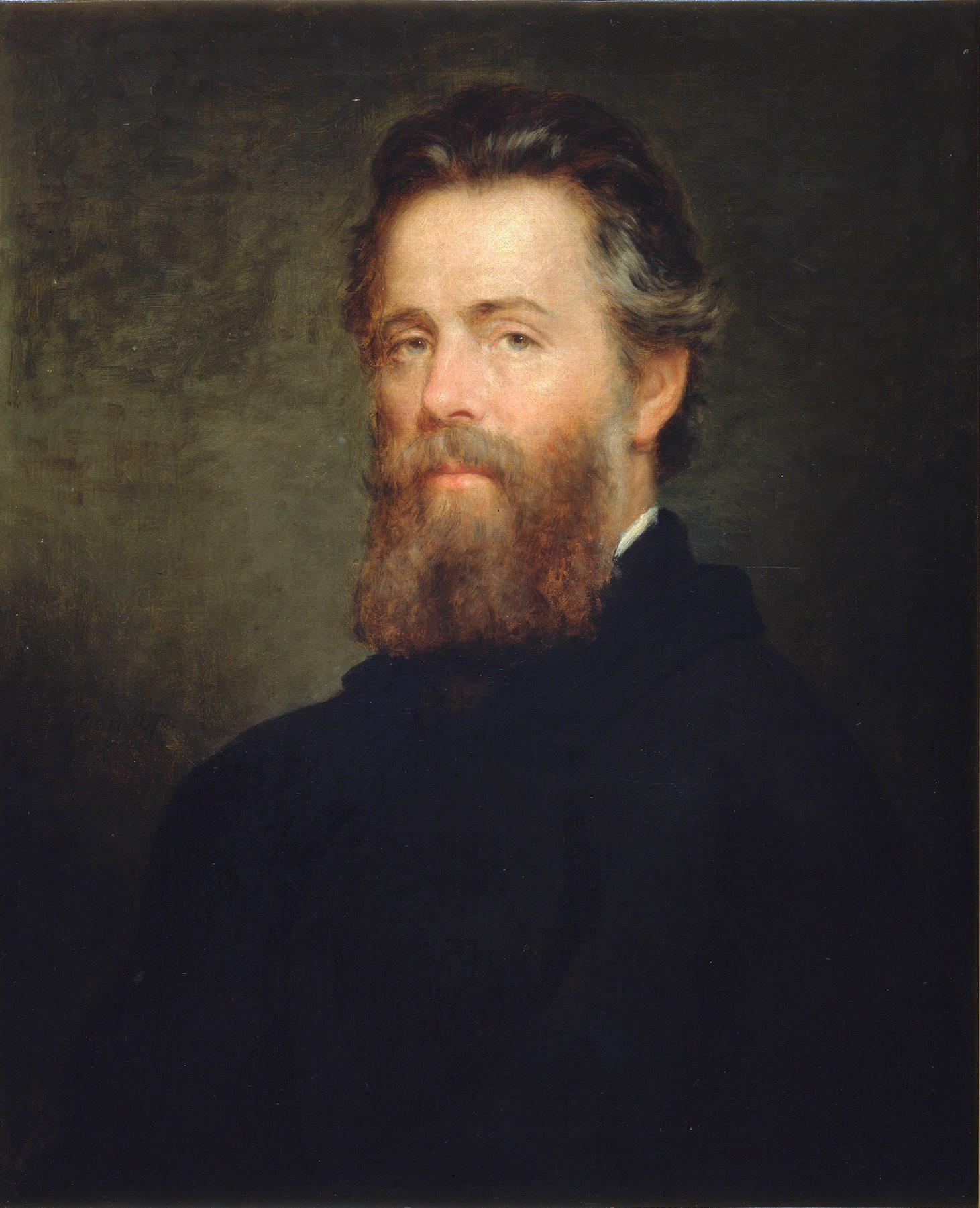
Herman Melville (Melvill) (August 1, 1819 – September 28, 1891)


