

SANDY KOZEL
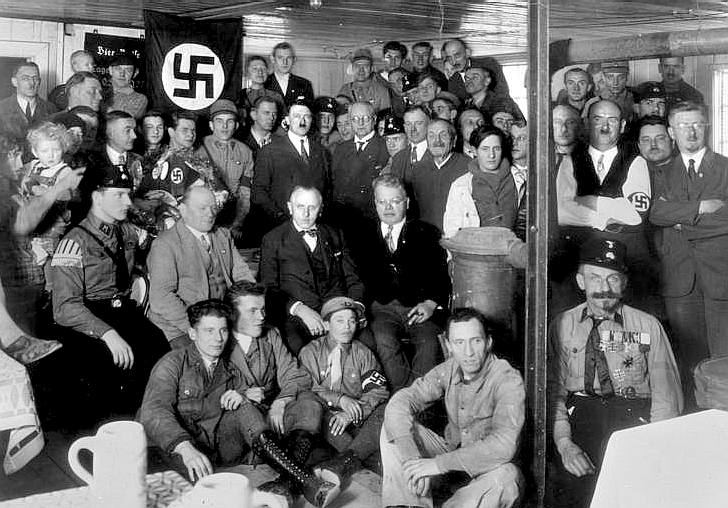
Hitler (seated second from left) poses with members of his
first cabinet in the chancellery.

SANDY KOZEL
Hitler (seated second from left) poses with members of his
first cabinet in the chancellery.

Dr.Jonas Salk administered one of the first polio shots.
On February 23, 1954, a group of children from Arsenal
Elementary School in Pittsburgh, Pennsylvania, receive the
first injections of the new polio vaccine developed by Dr.
Jonas Salk (above). Thanks to the vaccine, by the 21st
century polio cases were reduced by 99 percent worldwide.
Though not as devastating as the plague or influenza,
poliomyelitis was a highly contagious disease that emerged
in terrifying outbreaks and seemed impossible to stop.
Attacking the nerve cells and sometimes the central nervous
system, polio caused muscle deterioration, paralysis and even
death. Even as medicine vastly improved in the first half of the
20th century in the Western world, polio still struck, affecting
mostly children but sometimes adults as well.
The most famous victim of a 1921 outbreak in America was
future President Franklin Delano Roosevelt, then a young
politician. The disease spread quickly, leaving his legs
permanently paralyzed.


ROSS SIMPSON

George Washington (February 22, 1732 – December 14, 1799)
Washington was soldier, statesman, and Founding Father who
served as the first president of the United States from 1789 to
1797. Appointed by the Continental Congress as commander of
the Continental Army, George Washington led the Patriot forces
to victory in the American Revolutionary War.


Presidents’ Day, officially Washington’s Birthday, is a holiday in the
U.S. celebrated on the third Monday of February to honor all persons who served in the office of president of the United States and a federal
holiday specifically honoring George Washington, who led the
Continental Army to victory in the American Revolutionary War,
presided at the Constitutional Convention of 1787, and was the first president of the United States.
Washington’s Birthday was celebrated on February 22 from 1879
until 1971, when the Uniform Monday Holiday Act moved it to the
third Monday in February, which can occur from February 15 to the 21st.The day eventually also became known as Presidents’ Day.
(though the placement of the apostrophe, if any, varies) and is
most often an occasion to remember all U.S. presidents, or to
honor Abraham Lincoln‘s and Washington’s birthdays together.


JOHN BELMONT


Ralph Dale Earnhardt Sr.
(April 29, 1951 – February 18, 2001)


